


Rental System
Why an exhibition stand can live more than once
The biggest lever in sustainable stand building is not the choice of materials. It is the number of times a stand is used.
In our experience, a single frame component from WWM's rental stock has already been built into more than 400 stands. Not for one client, but for many: in March for a medical technology manufacturer, in May at a logistics exhibition, in September for a software company. Nobody who owns their own stand will ever reach that figure.
Shared across clients rather than in your own warehouse
A company that has bought its own exhibition stand puts it up two to four times a year. For the rest of the year it sits in storage, taking up space. The cost of building it therefore has to be spread across a handful of uses per year.
In the rental stock, the same frame component is on the road several times a month, because it is not assigned to one client. This pooling effect is the real difference, and it only works if the parts are standardised. A stand built individually by a joiner cannot be passed on to the next client; a system frame can.
This is also why WWM has not had its own joinery workshop since the COVID-19 pandemic. Without a workshop, there is no capacity that needs to be kept busy, and therefore no interest in building every project from scratch.
Can you tell that a stand is rented?
This is the question that comes up in almost every conversation, usually only after a while. The answer has to do with how the stand is constructed.
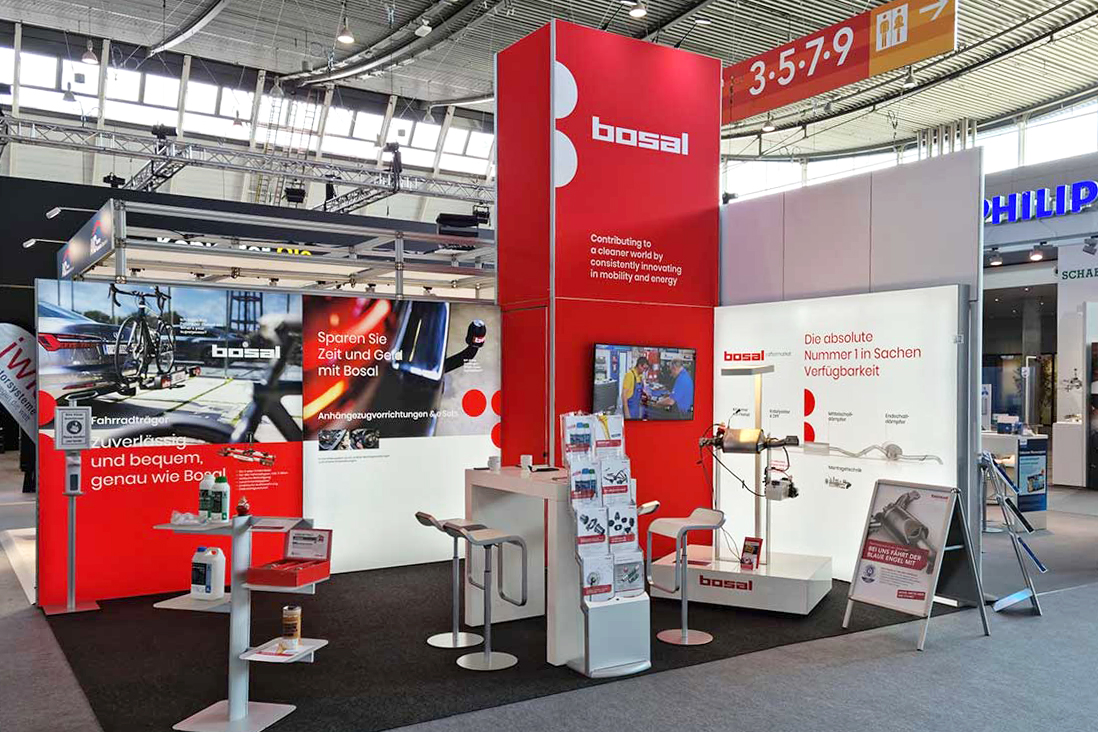
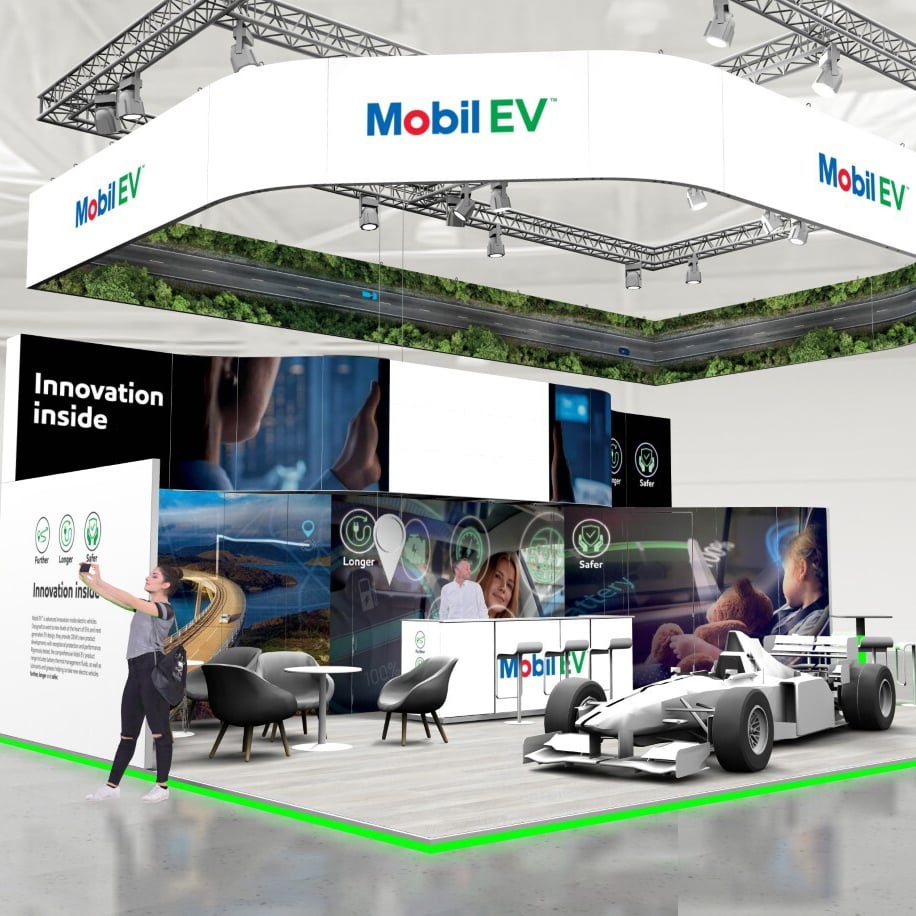
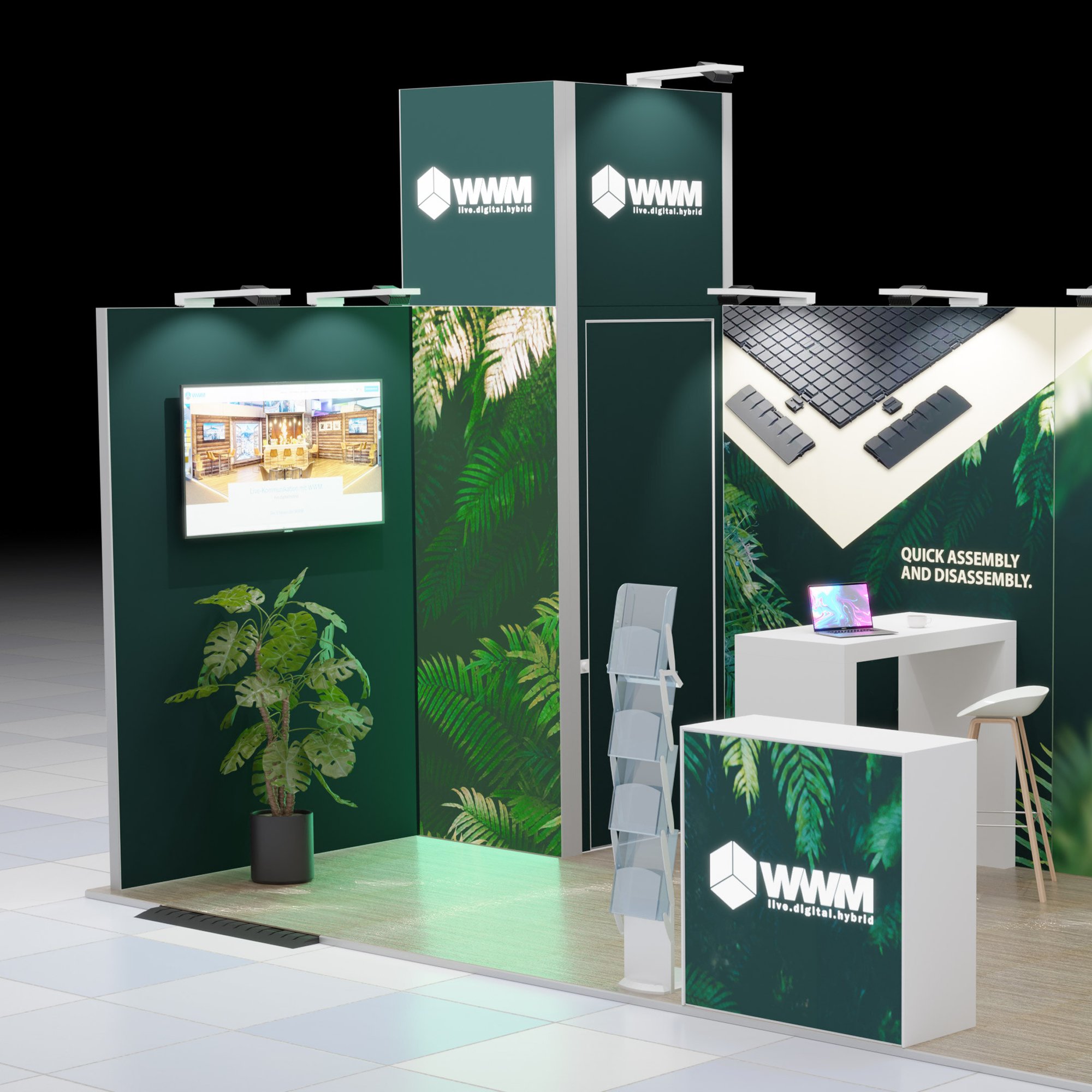
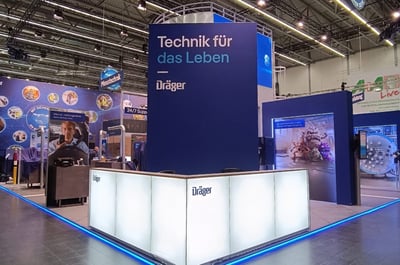
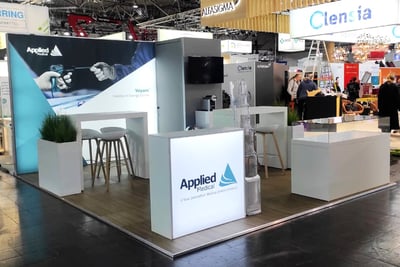
What you see on the finished stand is almost never the frame, but the fabric covering, and that belongs entirely to you. Your graphics, your corporate design, your formats. What lies underneath is technology that visitors do not see and are not meant to see.
Then there is flexibility: because the systems are modular, the same exhibition stand can be re-planned for a different space. With ExpoCloud this is possible at no extra cost; with RocketExpo it is possible if the components can be reused one-to-one. If you own your stand, you do not have this freedom; you have to put it up again as soon as possible, otherwise the investment was an expensive one.
Which frame systems we use
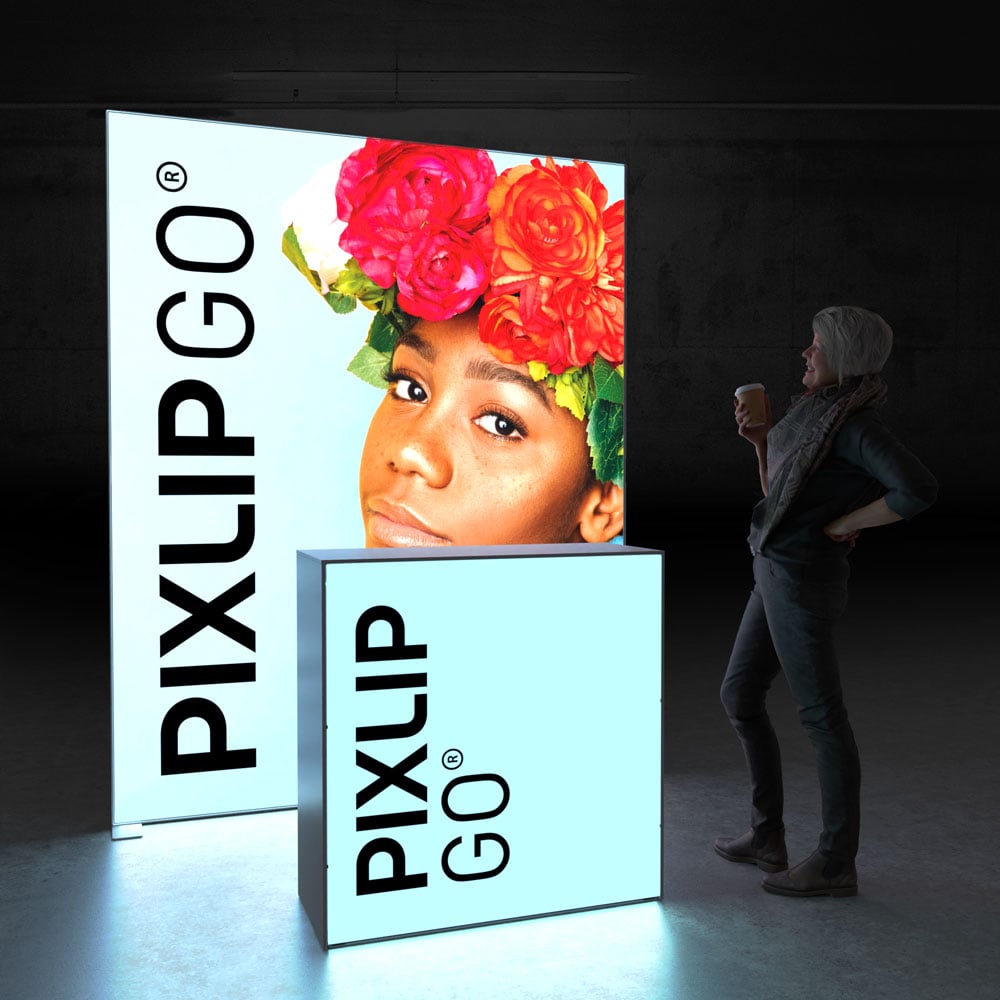
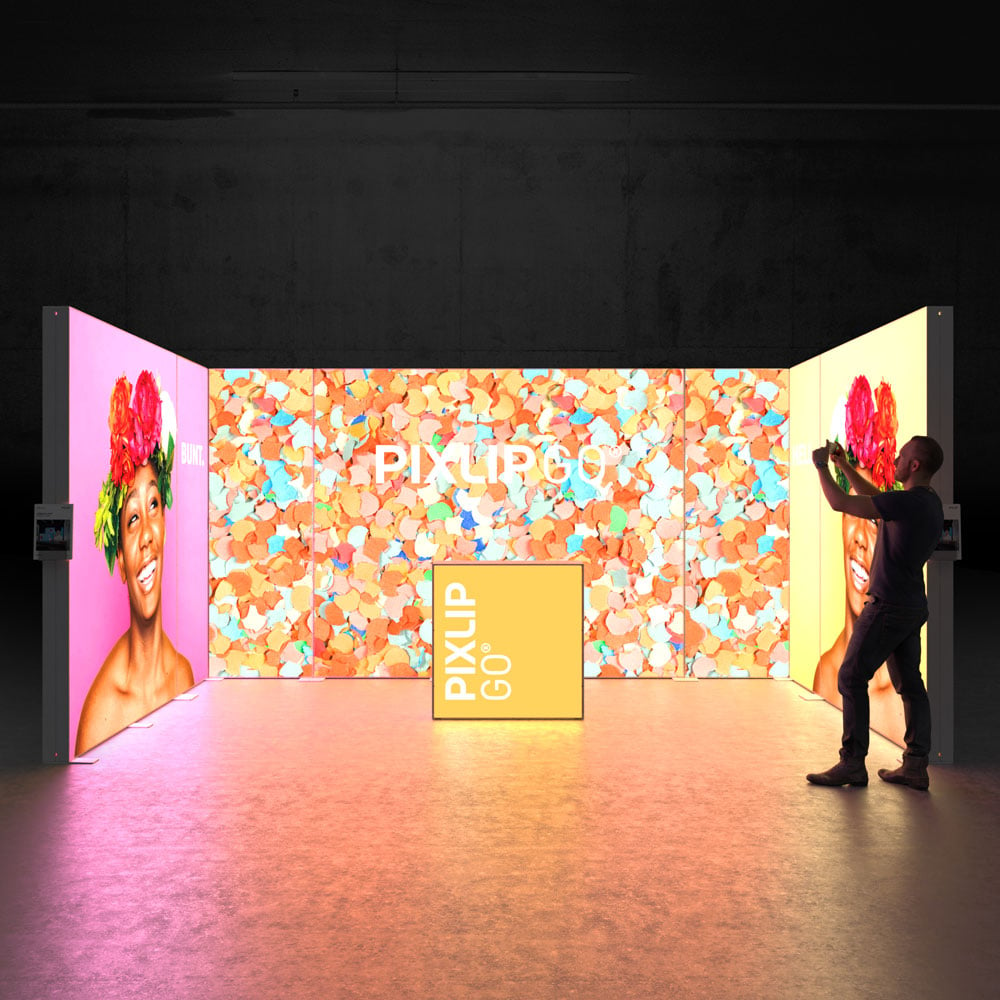
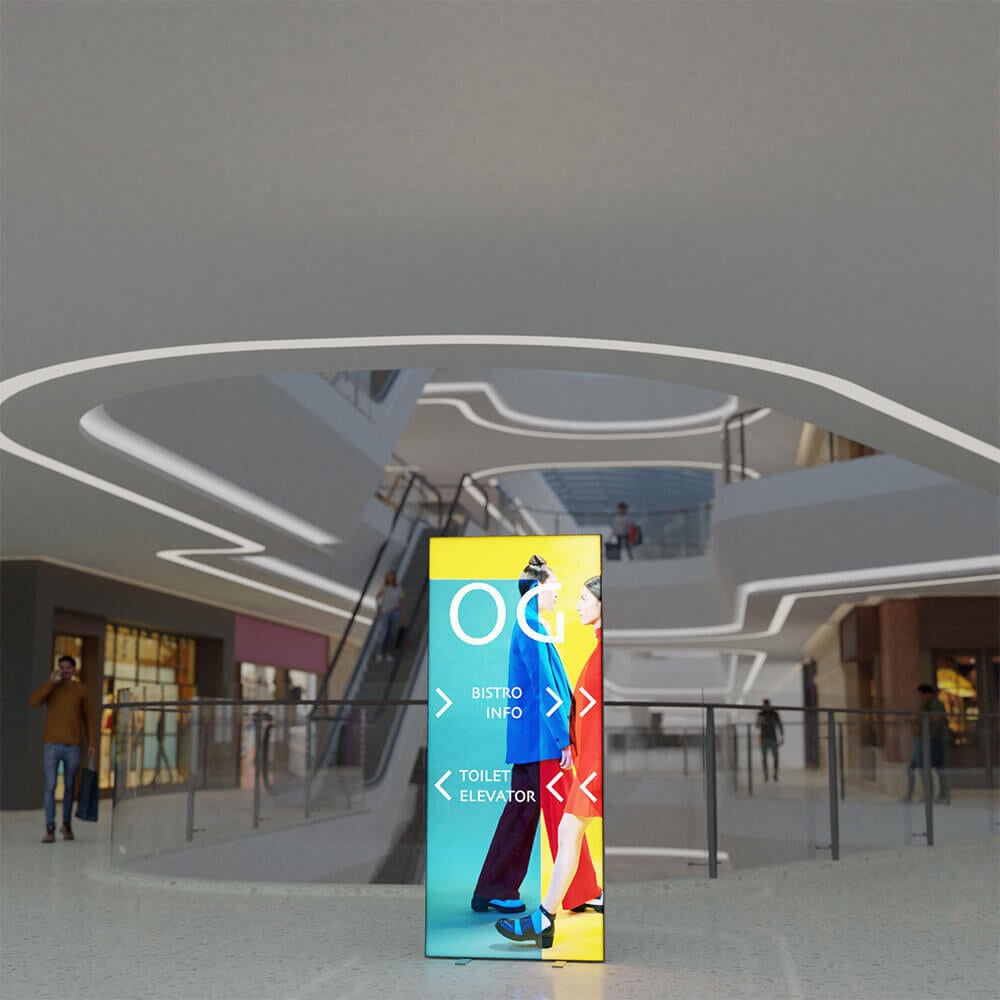
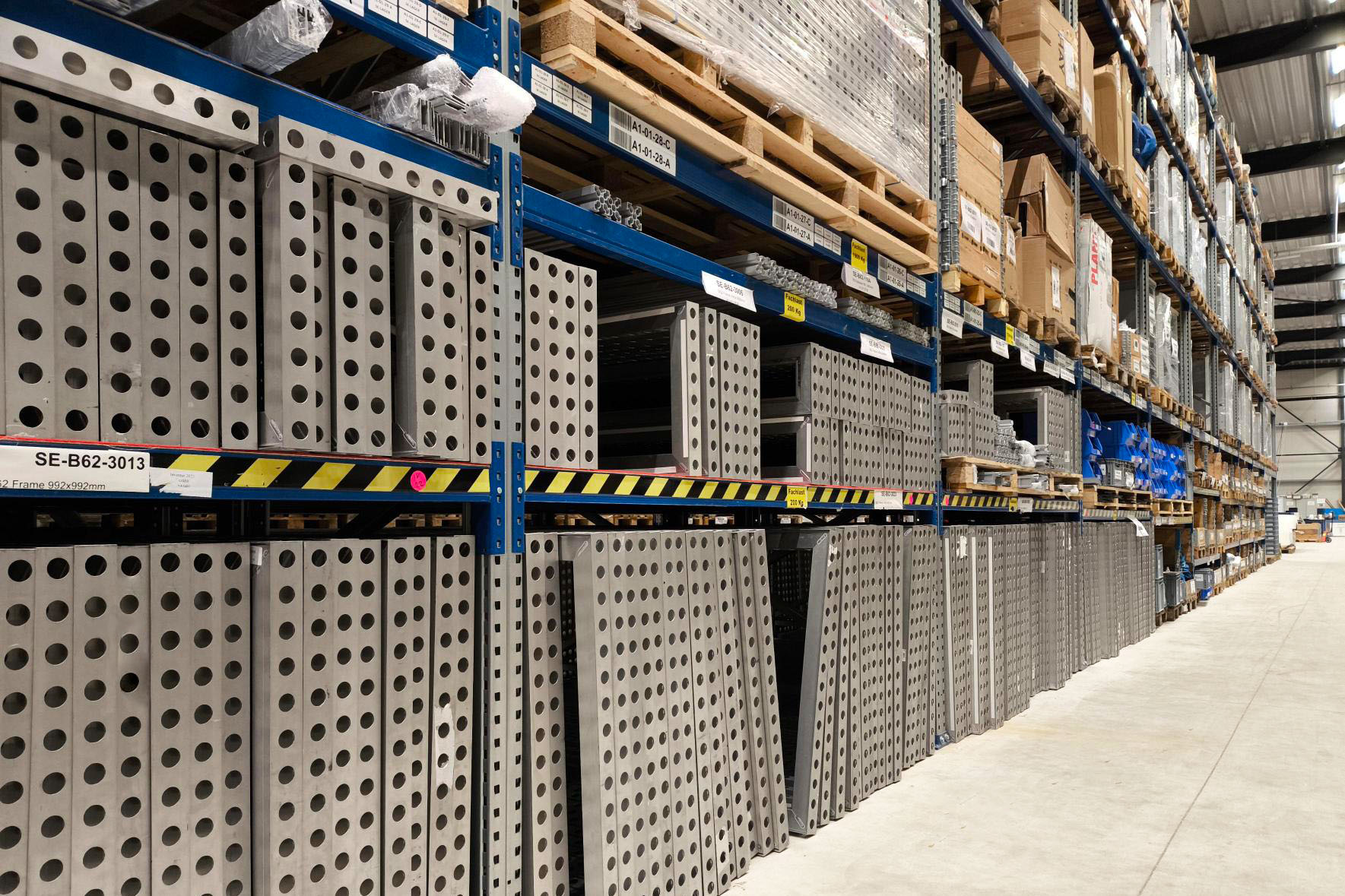
We build with beMatrix frame systems from the B62 and B124 series, as well as Pixlip GO. WWM is a Pixlip partner.
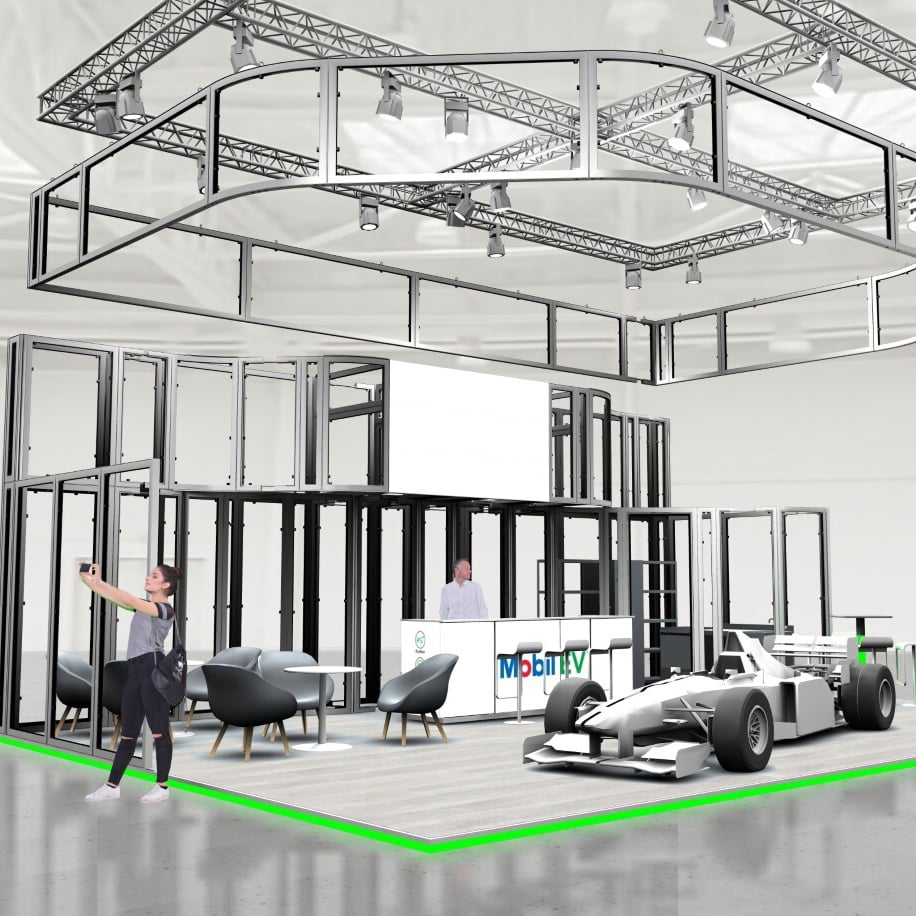
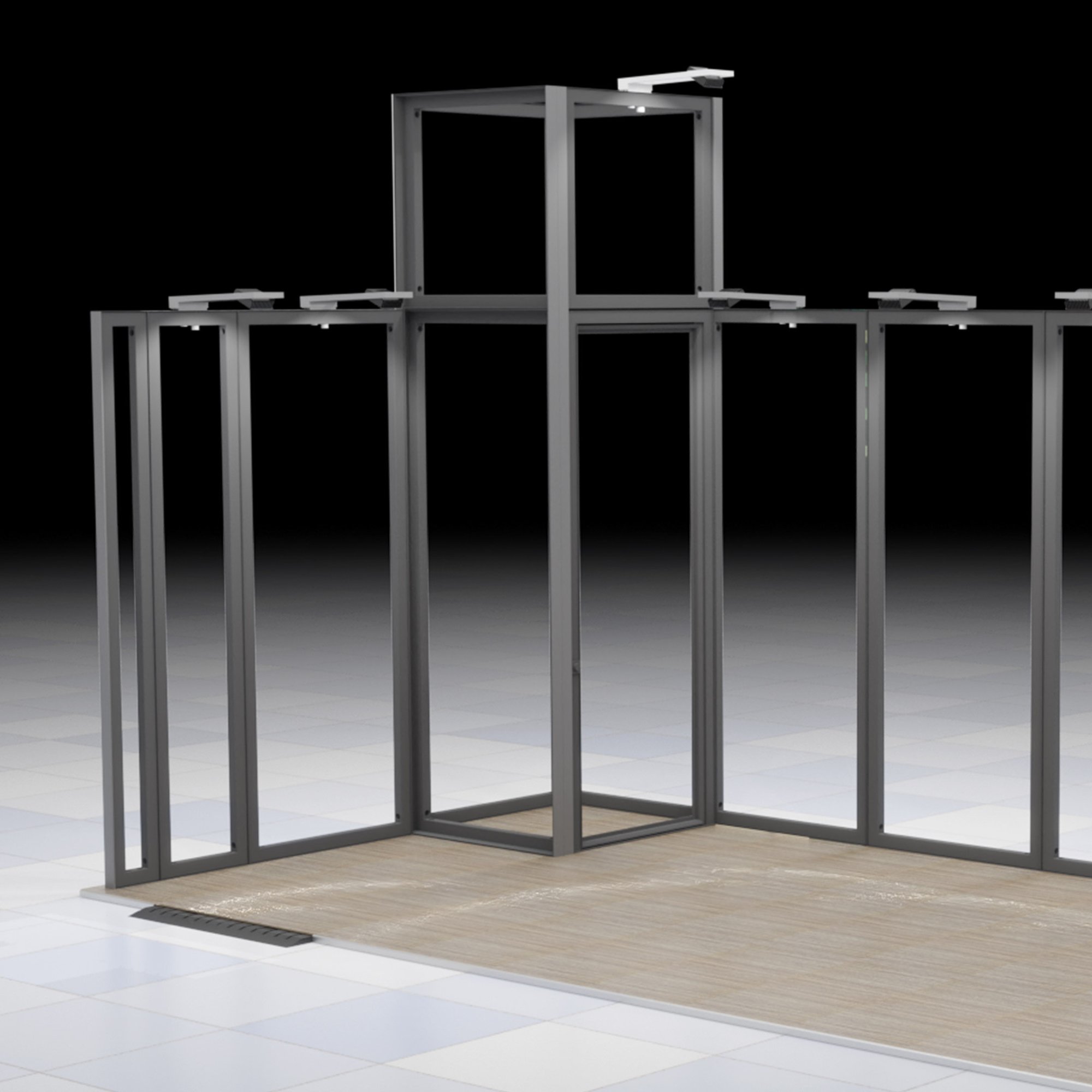
Both systems are modular. That means two things: a stand can be re-planned for a different stand size, and an individual component fits the next project without modification. It is precisely this property that makes reuse across clients possible in the first place.
What happens to your graphics between two shows
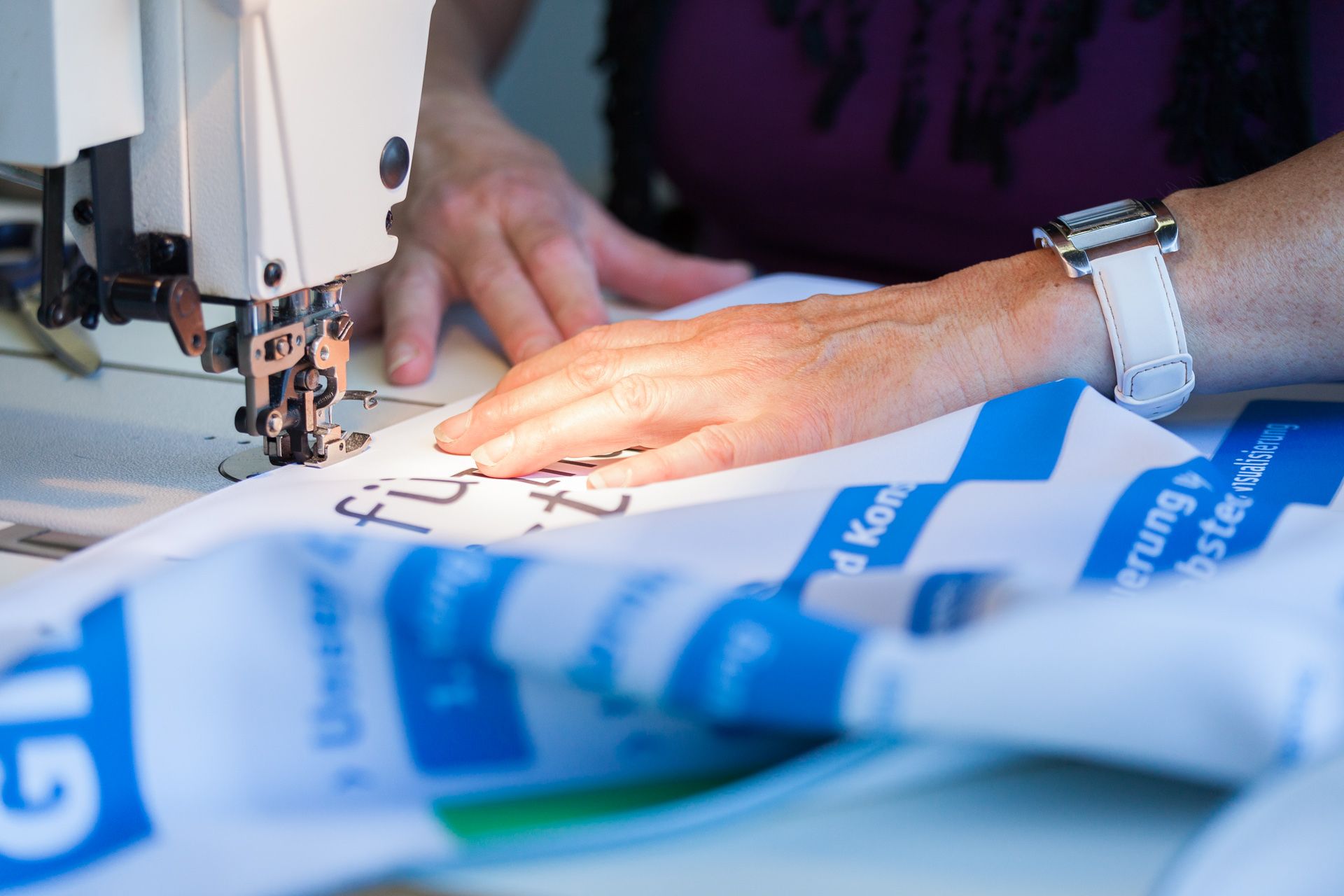
Graphics are printed onto textile panels by dye sublimation using water-based inks. The practical reason is a down-to-earth one: these panels do not crease. They can be folded, shipped and fitted again next time instead of being reordered.
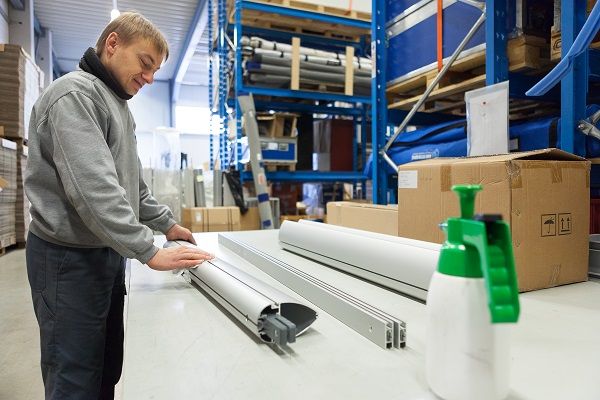
After every use, each graphic is checked and cleaned. Only material that is clean and in good condition goes into storage.
That sounds like a matter of course, but it is a deliberate decision: because the inspection takes place at goods-in, there is no need for another check during dispatch. Whatever leaves the warehouse is ready to use, without anyone discovering in the week before the show that last year's panel has a stain on it.
Your graphics remain your property throughout. They are the only client-specific items; frames and furniture come from the shared stock.
WWM does not produce the graphics itself. We specify the process, check your print files, commission production from partners and bring the parts together within the project. If you do not have an agency, our MediaServices department takes care of prepress and, on request, artwork creation too.
Not every part survives every build
Stand building is manual work under time pressure. Parts get scratched, profiles warp, something gets knocked over. What happens next depends on the extent of the damage: minor damage is repaired, but as a rule the affected part is replaced.
The fact that individual components can be swapped at all is, once again, down to the system. With a custom-built wall, damage means a job for the workshop. With a frame system, it is one part that gets exchanged while the rest of the stand stays exactly as it was.
No rental system without storage
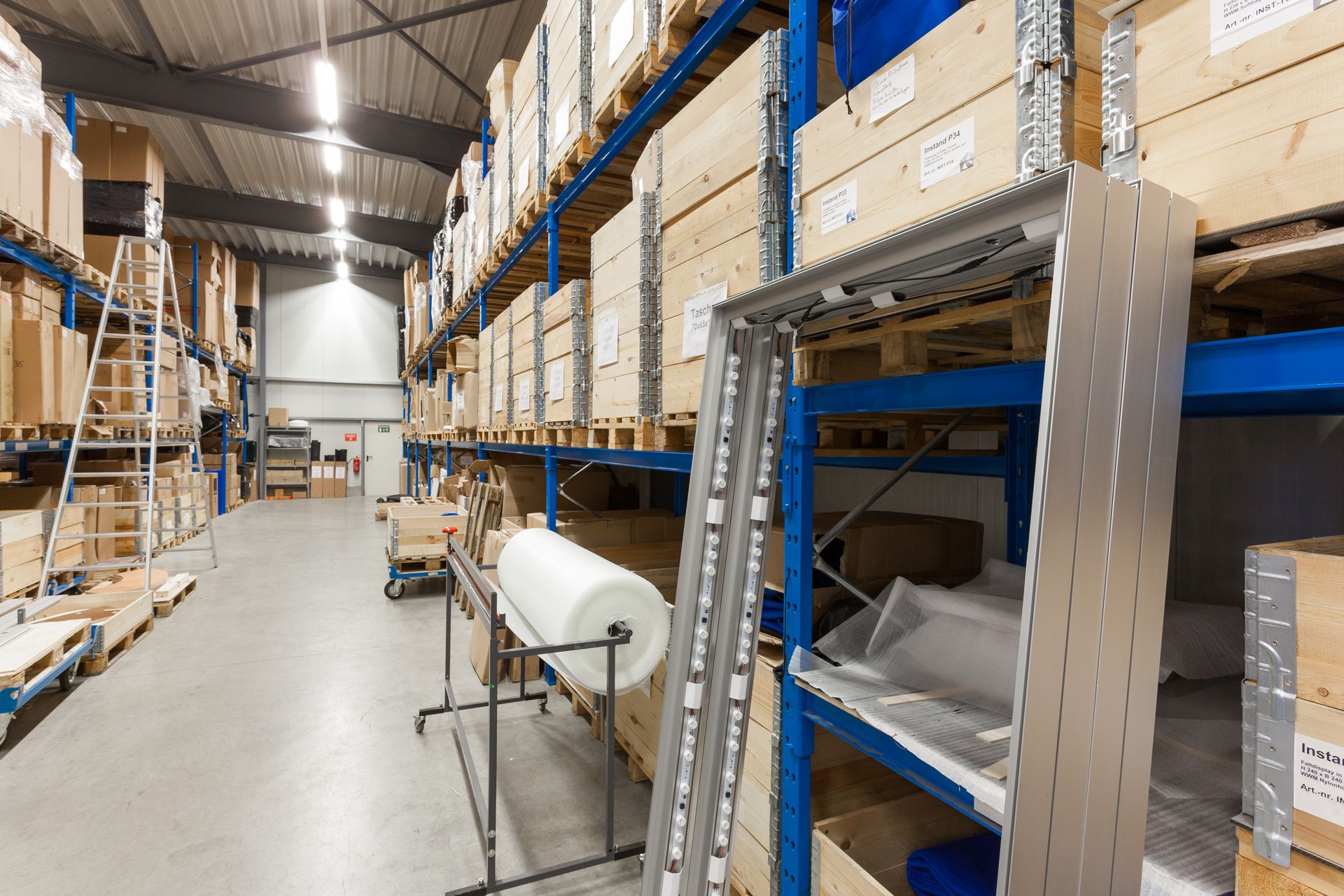
Reuse sounds like an attitude, but in reality it is a question of storage. Material that is sitting somewhere cannot be pooled. Neither can material whose condition nobody knows.
That is why the rental stock of our ExpoCloud unit is kept at the logistics hub in Alsdorf, in a high-bay warehouse that is climate-controlled all year round – paper and textiles need that. The stock of our RocketExpo unit is kept at our headquarters in Monschau. Inventory is managed electronically, and stock levels and condition can be viewed in the myWWM portal.
Your stored material remains your property and is insured; the insured value is 1,500 euros per pallet space and is included in the storage fee.

Use, don't own
Ownership comes with obligations. Anyone who has bought an exhibition stand needs to put it up again as soon as possible, otherwise the investment does not pay off. The space booked at the next show is then dictated by the existing stand rather than by the goal of the exhibition.
The sentence that has summed this up for us for years: a client wants to use an exhibition stand, not own one.
Rented material ties up no capital and does not appear on the balance sheet. Above all, though, it lets you plan differently for 40 square metres than for 100, without anything being left over that someone has paid for.
Frequently asked questions
In our experience, a frame component from WWM's rental stock has already been used in more than 400 builds. That figure is only possible because it is used for many different clients – a single company only reaches a handful of uses per year.
As a rule, no. Almost the only thing visible on the finished stand is the fabric covering, and that is specific to you: your graphics, your corporate design. The frames behind it are technology that visitors never see.
beMatrix frame systems from the B62 and B124 series, as well as Pixlip GO. WWM is a Pixlip partner. Both systems are modular, so an exhibition stand can be re-planned for different stand sizes.
Every graphic is checked and cleaned after use and only then put into storage. Because the inspection takes place at goods-in, the material is ready to use for the next shipment. The graphics remain your property; frames and furniture go back into the shared rental stock.
That depends on the extent of the damage. Minor damage is repaired, but as a rule the affected component is replaced. Because it is a system part, the rest of the stand is not affected.
Yes. Thanks to the modular design, an exhibition stand can be re-planned for a different floor space. With ExpoCloud this is possible at no extra cost; with RocketExpo it is possible if the components can be reused one-to-one.
Graphics and client-specific fittings remain the property of the client, including while they are stored at WWM. Frame systems and furniture come from the rental stock. The stored material is insured; the insured value is 1,500 euros per pallet space.
The full calculation
A stand that is set up ten times only has to be produced once. That is all there is to the principle.
What this means for your exhibition presence depends on how often you exhibit and how bespoke your stand needs to be. We will work that out with you in conversation; the two routes there lead through RocketExpo and ExpoCloud.
Discuss the rental system for your project
Compare our three units