
 Rebecca Zimmermann
Trade shows remain an important part of many companies' marketing and sales strategies. At the same time, there is growing pressure to make events more resource-efficient and to support sustainability goals in a measurable way. Exhibition stand construction in particular holds enormous potential here. After all, the environmental footprint of a trade show appearance is not determined by materials alone, but above all by reuse, smart logistics and long-term planning.
Sustainable exhibition stands help companies reduce their resource consumption, lower costs in the long run and still deliver a professional brand presence. But what actually makes an exhibition stand sustainable? And what should exhibitors look for when choosing a stand builder?
Sustainable Stand Construction Means More Than Eco-Friendly Materials
When people talk about sustainable stand construction, many first think of recycled materials or sustainable wood-based products. These aspects are important, but they often fall short.
A sustainable approach considers the entire life cycle of an exhibition stand:
-
Planning and concept
-
Material selection
-
Production
-
Transport
-
Build-up and use
-
Storage and maintenance
-
Repeated reuse
-
Recycling at the end of its service life
The greatest environmental impact usually comes not from individual materials, but from how often an exhibition stand or its individual components can be used.
Reusable Exhibition Stands as the Most Important Sustainability Factor
The biggest lever for greater sustainability is reuse. While custom single-use constructions are often disposed of after one event, reusable exhibition stands can be used at many different events over many years.
This spreads the material input, energy consumption and production effort across numerous trade show appearances.
The advantages are obvious:
-
Lower material consumption
-
Reduced CO₂ emissions
-
Less waste after events
-
Lower investment costs across several trade show cycles
-
Greater planning certainty for future events
Modular stand concepts in particular make it possible to reconfigure existing elements again and again and adapt them to different stand sizes.
Modular System Components Create Sustainability and Flexibility
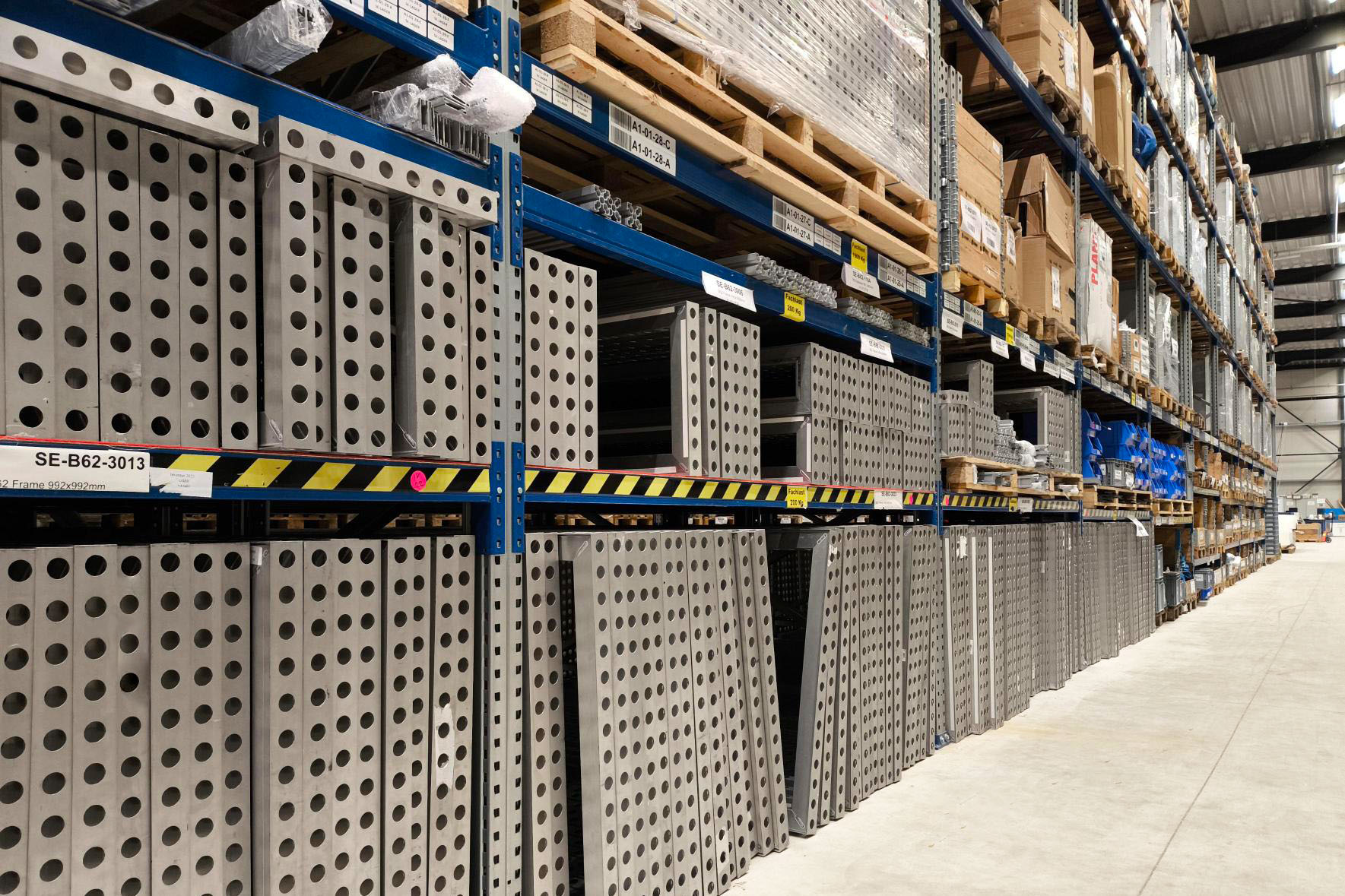
Modern sustainable exhibition stands are often based on standardised system components. Aluminium frames, modular wall elements and flexible constructions form the foundation.
The advantage: the same components can be used in a wide variety of stand concepts. A professional stand builder usually has an extensive stock of such system elements, which are used continuously across different projects.
This high utilisation rate significantly improves the environmental footprint of each individual component. At the same time, exhibitors remain flexible and can adapt their stand to changing requirements without having a completely new stand produced every time.
Aluminium Combines Lightweight Construction, Durability and Recyclability
A key element of eco-friendly stand construction is the choice of suitable materials. Aluminium in particular has become established in modern exhibition stand construction.
There are several reasons for this:
Lower Transport Weight
The lighter an exhibition stand is, the more efficient the logistics. Since transport vehicles are limited in both volume and permissible weight, lightweight constructions can significantly improve transport efficiency.
Long Service Life
Aluminium frames are extremely robust and can be used for many years. Their long service life ensures that the resources used in their manufacture are put to the best possible use.
Recycling Without Loss of Quality
At the end of their life cycle, aluminium components can be recycled almost completely. The material can be melted down and used again. This keeps valuable raw materials in circulation and reduces the need for new material.
Transport and Logistics Are Often Underestimated
Many sustainability assessments focus exclusively on the exhibition stand itself. Yet significant emissions are often already generated by transport and logistics.
A sustainable stand builder therefore pays attention to short delivery routes and efficient transport concepts. International rental and service networks, for example, make it possible to provide many stand components directly on site instead of transporting them across Europe.
Storage also plays an important role. When exhibition stands are professionally stored, maintained and prepared for subsequent use, their service life is extended considerably. At the same time, the need for new production is reduced.
Textile Graphics as a Sustainable Alternative to Conventional Wall Solutions
Besides the substructure, the trade show graphics also influence how sustainable a stand is.
Modern textile graphics offer several advantages over conventional vinyl films or large-scale wall cladding:
-
Low weight
-
Space-saving storage
-
Reusability
-
Easy cleaning
-
High-quality design
-
Option for backlighting
After use, the textiles can be folded and stored in a space-saving manner. If they get dirty, they can often be cleaned and used again. This conserves resources and avoids unnecessary waste.
At the same time, large-format textile prints enable a high-quality brand presentation without compromising on stand design.
Rental Furniture and Standard Ranges Reduce Resource Consumption
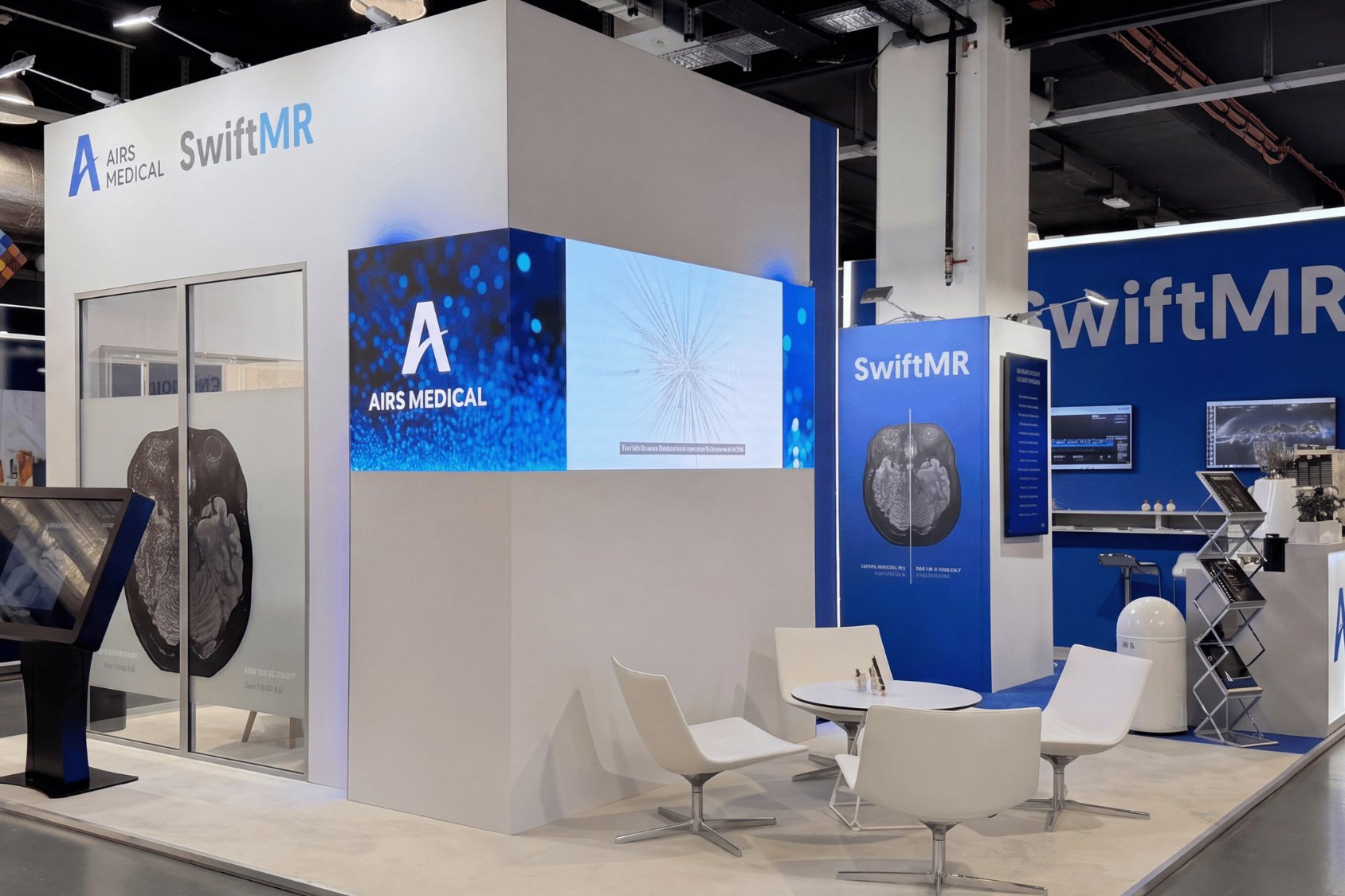
Not every component of an exhibition stand has to be custom-made. For furniture, displays, counters and technical equipment in particular, renting offers sustainable advantages.
Professional stand builders often work with an extensive rental range that is used regularly at different events.
These standardised components offer several advantages:
-
High product utilisation
-
Less material input
-
Easier repairs
-
Lower production effort
-
Optimised logistics
For many companies, this results in both environmental and economic benefits.
How Can Exhibitors Recognise a Sustainable Stand Builder?
Since many providers now advertise sustainability, it is worth taking a close look at the measures they actually take.
The following criteria indicate a sustainable stand builder:
Focus on Reuse
How many stand components can be used multiple times?
Modular Stand Concepts
Can existing elements be used flexibly for different events?
Sustainable Logistics
Are there regional storage locations or international service partners to reduce transport distances?
Storage and Maintenance
Are exhibition stands professionally stored, maintained and prepared for future use?
Transparency
Can the provider clearly explain how CO₂ emissions, material use and reuse rates are being reduced?
Conclusion: Sustainable Exhibition Stands Combine Cost-Efficiency and Environmental Responsibility
Sustainable exhibition stands are far more than a short-term trend. They enable companies to make their trade show appearances more resource-efficient while reducing costs in the long term.
The greatest contribution to sustainability comes from reusable exhibition stands, modular system components and smart logistics concepts. Combined with durable materials such as aluminium, reusable textile graphics and rental furniture, this results in trade show concepts that unite environmental and economic goals.
When choosing a stand builder, exhibitors should therefore look beyond design alone. What matters most is reusability, transport concepts, storage solutions and the long-term usability of the components used.
Anyone who considers sustainability right from the planning stage of their trade show appearance not only improves their carbon footprint but also lays the foundation for a future-proof trade show presence with measurable added value.
Would you like to make your next trade show appearance more sustainable? We will work with you to develop sustainable trade show concepts. Get in touch with us now.