 Rebecca Zimmermann
Recyclable and reusable in comparison
 Zarana Patel : Friday, 29. August 2025
Compare recyclable and reusable materials for sustainable trade fair and event concepts and their ideal combination.
An impressive trade show presence doesn't begin with the build-up on the exhibition grounds. What visitors later perceive as a coherent overall picture is the result of a structured process in which design, technology and production work closely together.
Trade show graphics are often underestimated in this respect. Many people assume that once the design is done, it simply gets printed and the graphics are then mounted on the stand. In reality, there is much more to it. Numerous rounds of coordination, technical checks and production steps ensure that the finished graphics not only look good but also fit the exhibition stand perfectly.
So how exactly is a trade show graphic created? Who is involved, what challenges arise, and why is a clearly defined process so important?
Every project starts with an idea. In the concept phase, we define what message the exhibition stand should convey and how the brand can be presented in the best possible way.
Several questions play a role here:
What goals does the trade show appearance pursue?
Which target group should be addressed?
Which content needs to be visible?
How can the brand identity be conveyed visually?
Based on these considerations, the first drafts and layouts are created. They form the foundation for all further steps and give a first impression of what the final trade show presence could look like.

A trade show graphic never works in isolation from the stand design. That is why coordination with the stand's architecture and construction begins early on.
Graphics must be tailored precisely to the designated surfaces. Sizes, sightlines, transitions and structural features are all taken into account. After all, a motif often looks different on a screen than it does on a back wall several metres high or on a curved stand structure.
Precise adaptation ensures that all graphics later blend seamlessly with the exhibition stand and achieve their full impact.
As soon as the design has been approved, the technical preparation of the data begins.
In this phase, the graphics are optimised for production. This includes, among other things:
Checking and adjusting the resolution
Colour corrections for printing
Optimising file formats
Checking bleed allowances
Adjustments to meet technical production requirements
This step is particularly important, because a graphic that looks perfect on a monitor does not automatically produce a good print result. Only professional data preparation ensures that colours, sharpness and image quality are convincing on large print surfaces as well.
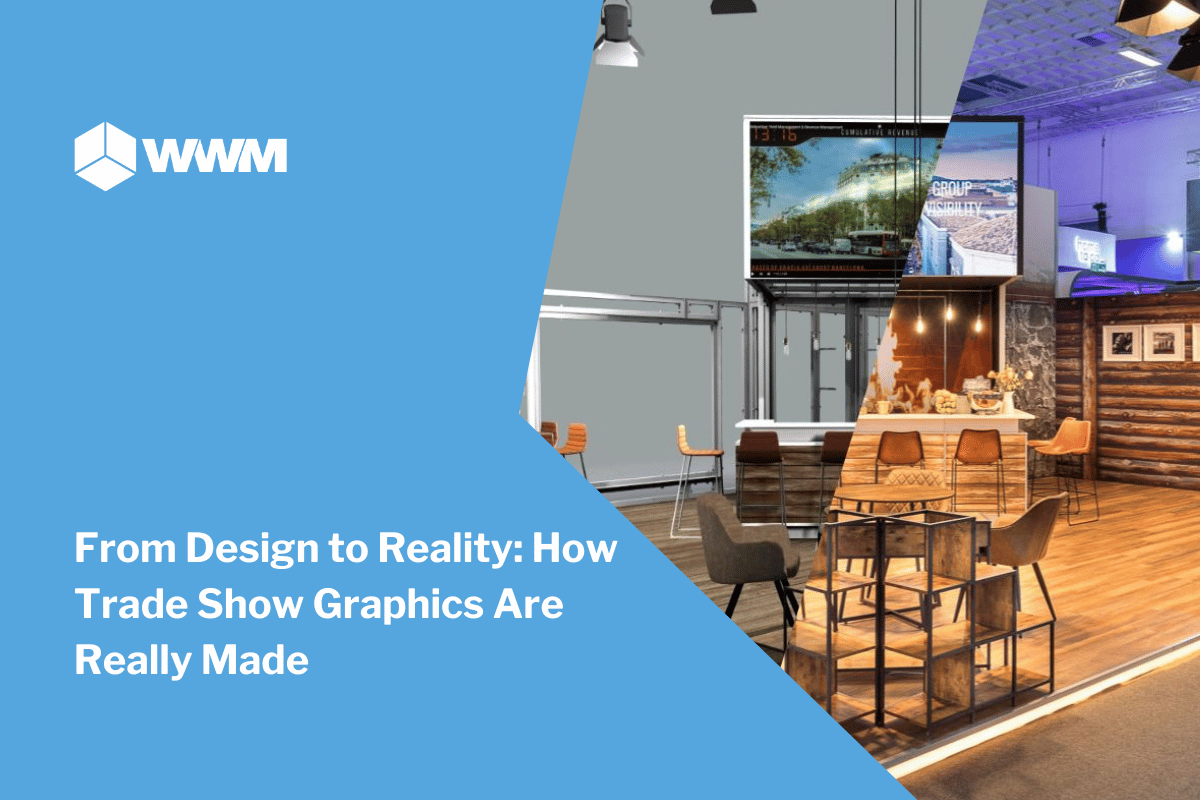
Before production starts, realistic previews are often created. These so-called renderings show the planned graphics directly within the final stand design.
The big advantage: everyone involved gets a realistic impression of the final result. Potential problems can be identified and resolved early, before cost-intensive production steps begin.
Visualisations therefore not only provide planning certainty but also reduce the risk of misunderstandings and late changes.
After the technical check and visualisation, the final coordination with the client takes place.
In this phase, final adjustments are made and open questions are clarified. These are often minor changes to texts, image positions or colour details.
Only when everyone involved is satisfied is the final approval for production given. This approval is a key milestone, as it forms the basis for all subsequent production steps.
Now the digital designs become physical trade show graphics.
The final print files are passed on to the production systems and transferred onto various materials. Depending on the intended use, different textiles and print media are used.
The most commonly used are:
Backlit textiles for illuminated light walls
Blockout materials for opaque applications
Tension fabrics for large-scale coverings
Special materials for individual requirements, such as rigid boards like acrylic, aluminium composite or PVC, as well as films
This phase largely determines the final quality of the trade show appearance. High-quality printing processes and careful production checks ensure that colours, contrasts and details are reproduced exactly.
After production, the graphics are integrated into the stand construction.
During the build-up, the prints are mounted, tensioned and checked for correct positioning. Especially with large-format motifs, maximum precision is required so that transitions, lighting effects and image sections line up exactly.
Minor adjustments are often made on site to achieve the best possible result. Only now do the individual components come together to form a coherent brand presence.
Once all elements are in place, it becomes clear why every single step of the process mattered.
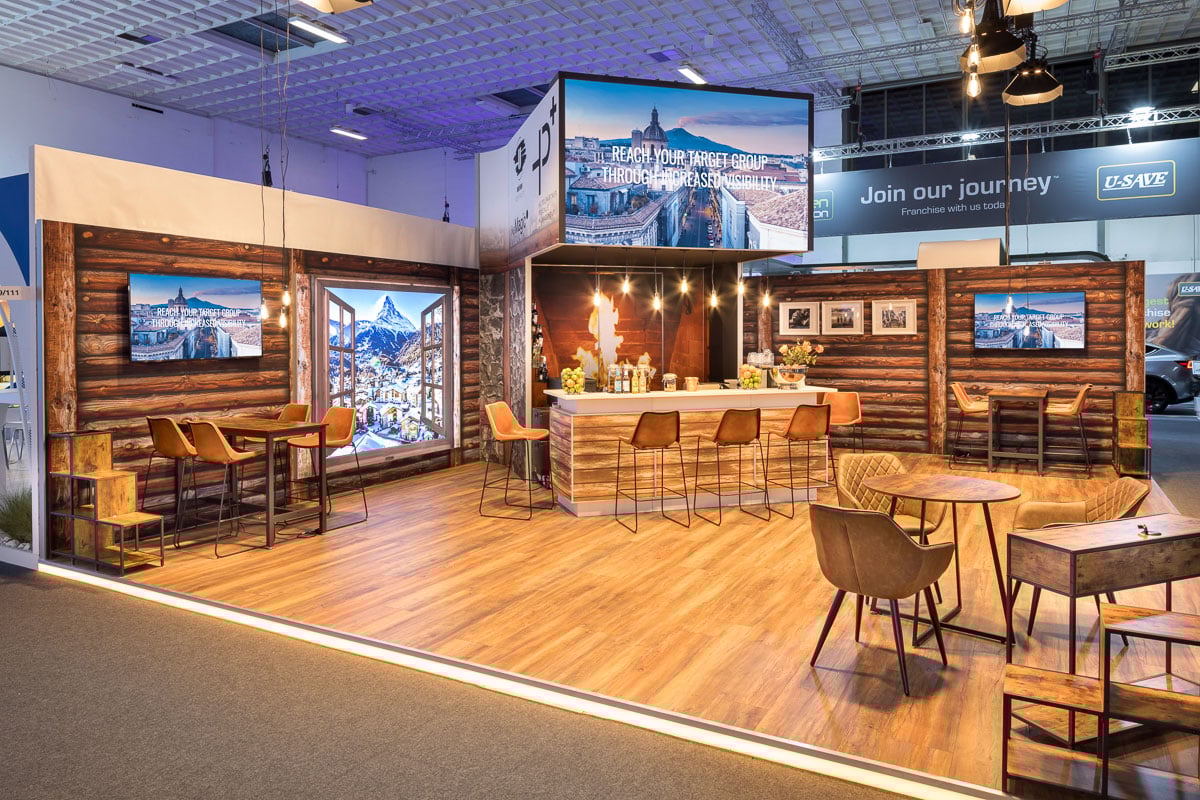
Together with the architecture, lighting and exhibits, the graphics create a unified brand world. They convey messages, attract attention and support communication with visitors.
Trade show projects involve many different trades and stakeholders. Without clearly defined workflows, problems quickly arise:
unnecessary rounds of coordination
errors in production
delays in the project schedule
additional costs
loss of quality in the end result
A structured process, on the other hand, ensures clear responsibilities, smooth handovers and significantly greater planning certainty. Errors are detected early, adjustments are implemented in good time and schedules are reliably met.
The result is faster workflows, higher quality and a trade show presence that truly lives up to the original design ambition.
Within this process, our MediaService plays a central role. It acts as the interface between design, technology and production.
Its key tasks include:
technical data checks
preparation and optimisation of print data
quality control
production management
coordination with print service providers
integration of the graphics into the exhibition stand
Through this central coordination, MediaService ensures that all elements of a project are aligned and that the desired quality is achieved.
This not only creates efficiency but also minimises sources of error and simplifies collaboration between everyone involved.
A modern exhibition stand doesn't come about "just like that". Behind every graphic there is a clearly structured process that goes far beyond the design itself.
From the first idea through technical data preparation to production and integration into the exhibition stand, different disciplines work hand in hand. Only the interplay of creativity, technical precision and professional execution turns a design into a compelling brand presence.
Anyone who takes this process into account early on and relies on clear workflows reduces risks, saves time and lays the foundation for a successful trade show appearance.
Would you like to realise your own project with us?
 Zarana Patel : Friday, 29. August 2025
Compare recyclable and reusable materials for sustainable trade fair and event concepts and their ideal combination.
 Maxima Matara : Friday, 22. May 2026
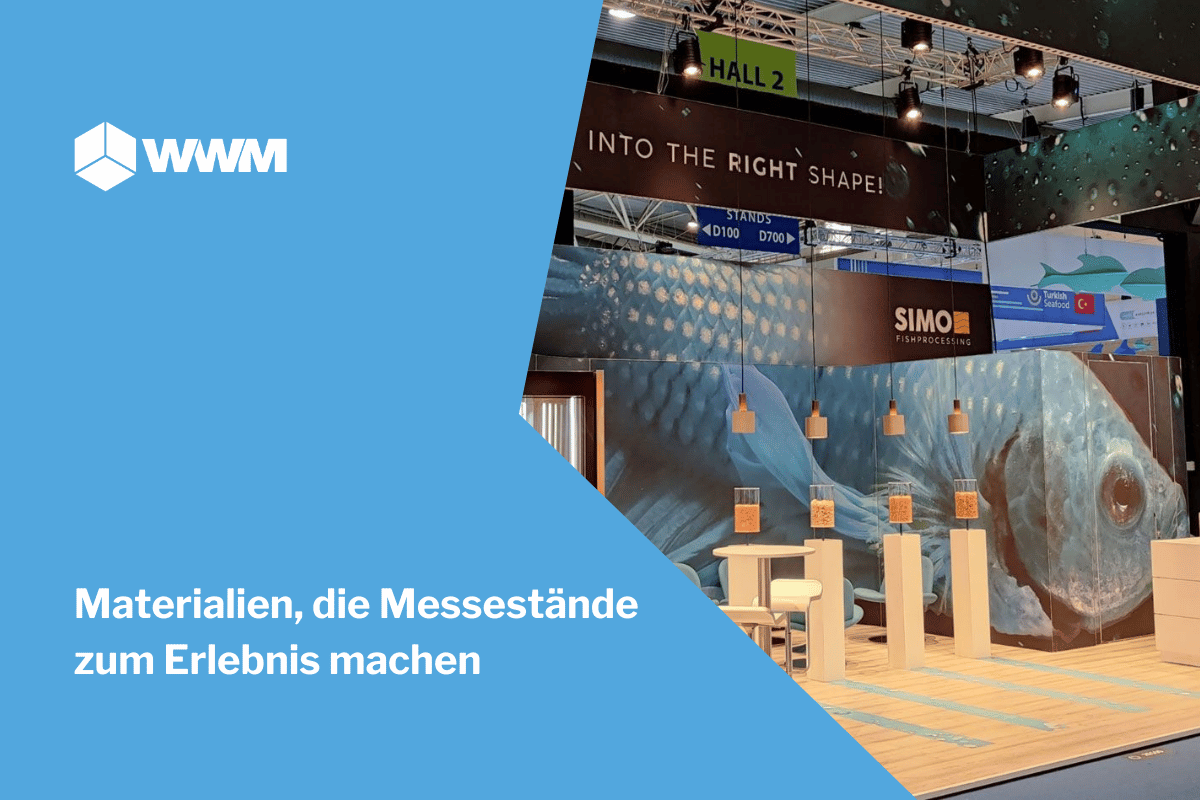
Full-service exhibition stand construction from planning to execution. We provide complete solutions for a successful trade show presence.
 Carina Gottschalk : Wednesday, 15. January 2020
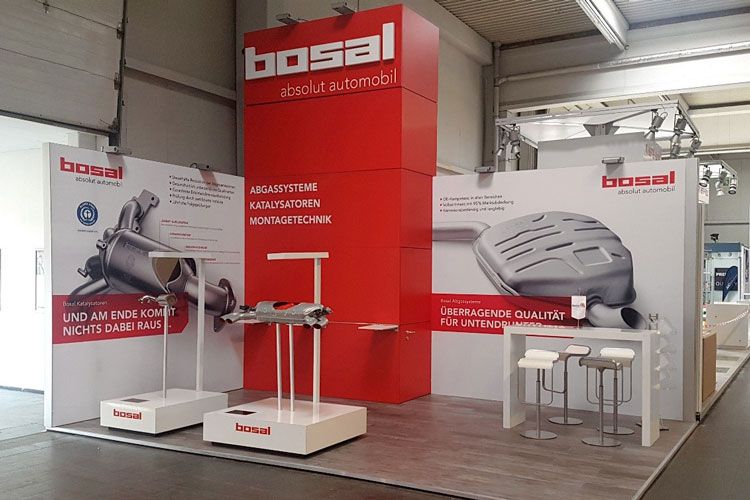
Can a customised exhibition stand be used multiple times? ✓ Tips for a customised and reusable exhibition stand ✓ Read the blog article!