 Rebecca Zimmermann
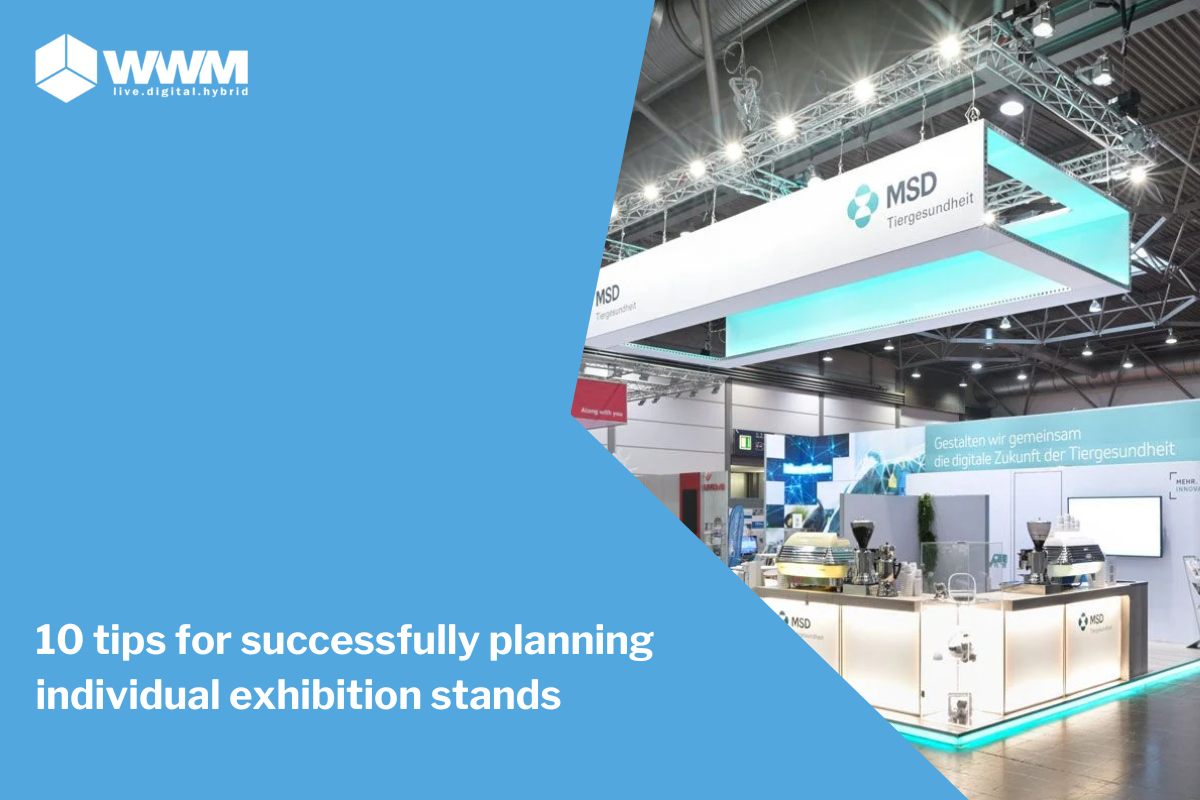
10 tips for successfully planning individual exhibition stands
 Maaike Rotthier : Friday, 15. November 2024
Tips for planning exhibition stands that stand out at trade fairs and build lasting customer relationships. 10 strategies
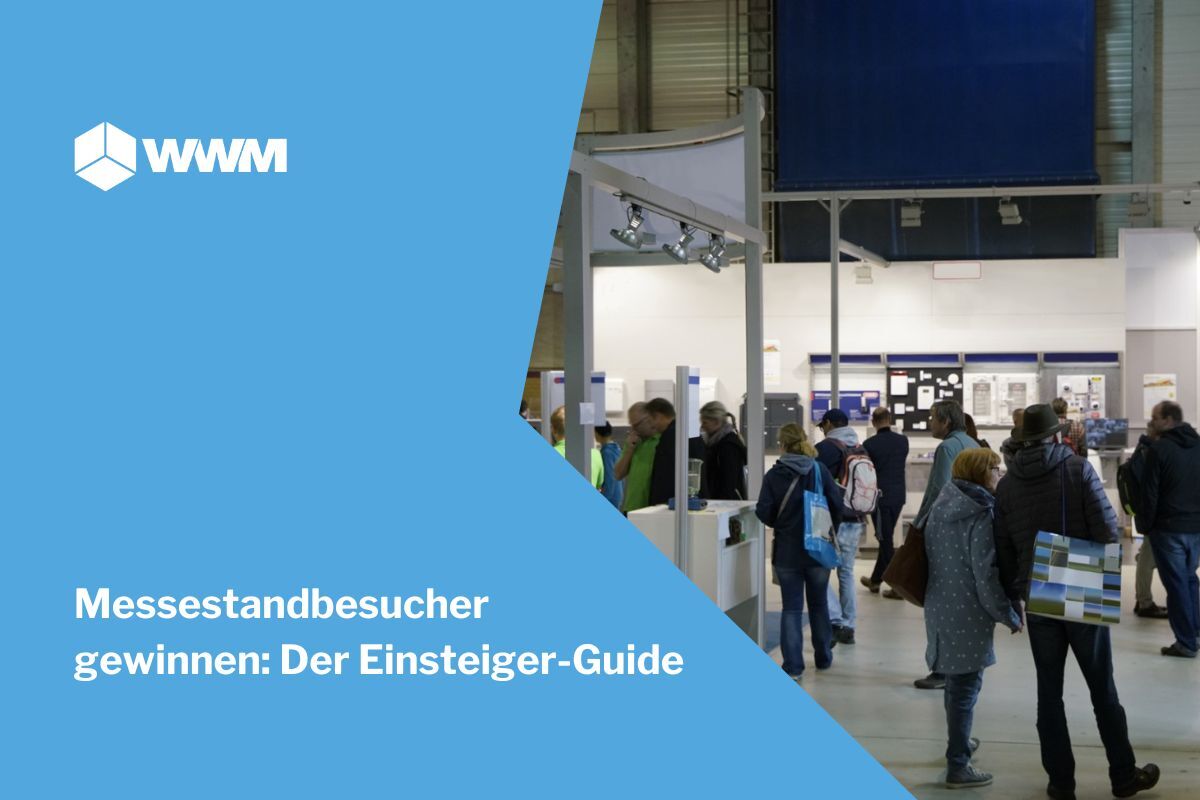
How do you attract more visitors to your trade show booth?
This question concerns almost every company exhibiting at a trade show. After all, without visitors there are no conversations, without conversations there are no leads, and without leads there is no trade show success.
Especially when attending a trade show for the first time, marketing and event teams face numerous challenges. In addition to booth planning, organization, and budget management, one key question must be answered:
Why should visitors stop at your booth?
In this guide, you'll learn how to make your trade show booth more attractive, engage visitors effectively, and avoid common mistakes.
Many companies invest significant time planning their trade show presence. Yet visitor numbers often fall short of expectations. One common reason is that exhibitors view their booth from the company's perspective rather than the visitor's.
Trade show attendees have limited time and are exposed to countless impressions. Within just a few seconds, they decide:
If the message is not immediately clear, the booth appears cluttered, or important elements are not visible, potential prospects will often simply walk past.
Every trade show presence should therefore answer one essential question:
Why is it worth stopping at this booth?
Not every exhibitor starts with a custom-designed trade show booth. Many companies initially use a standard booth provided by the event organizer.
The good news: Even with limited options, you can still attract attention.
Standard booths are functional but often less noticeable than custom-designed exhibits.
That's why you should focus on one central message.
These key messages should be visible from several meters away.
Moving content in particular captures attention and encourages visitors to stay longer at your booth.

A successful trade show appearance does not depend solely on budget size. Many small and mid-sized companies achieve better results with simple, well-planned activities than exhibitors with much larger booths.
The most important success factor is not booth size but this question:
How do I create a reason for visitors to stop at my booth?
A shared booth with a complementary provider can reduce costs while increasing your overall reach.
Coordinate product presentations with your partner to create a compelling visitor experience and narrative.
Learn more about shared exhibition booths here.
Many event organizers offer exhibitors free promotional opportunities, including:
Many companies overlook these opportunities, even though they are often already included in the exhibitor package.
A common misconception is:
"Our product is so good that visitors will come automatically."
In reality, visitors are initially interested in solving their challenges, not learning about products.
Instead of:
"Innovative software solution since 2014"
Try:
„Reduce project planning time by 30%"
or
„How industrial companies can lower energy costs"
Benefit-focused messaging attracts significantly more attention.
You don't need a large budget to actively engage visitors.
Examples include:
The advantage is simple: people stop, participate, and conversations start more naturally.
Many companies try to explain their products with long blocks of text.
At trade shows, this rarely works.
The faster visitors understand the value of your solution, the higher the likelihood of starting a conversation.
Companies that rent or purchase their own custom booth have far more design flexibility.
However, a larger budget does not automatically guarantee greater success.
Your booth design should clearly reflect your brand through:
Everything should work together to create a cohesive appearance.
Visitors should immediately understand where to look.
Place the following in the most visible areas:
Too many elements can overwhelm visitors.
The most important rule:
Fewer messages = greater impact.
Visitor acquisition doesn't begin on the first day of the event.
Successful exhibitors start communicating weeks or even months in advance.
Many exhibitors rely on spontaneous booth traffic.
Successful event teams fill their calendars before the trade show even begins.
Just ten to fifteen pre-arranged meetings can significantly improve the ROI of an entire trade show appearance.
Promote your participation early:
The more people know you'll be exhibiting, the more likely you are to attract visitors to your booth.
Personal email invitations remain one of the most effective methods for increasing booth traffic.
Your company page shouldn't be the only platform promoting your trade show presence.
Encourage sales teams, executives, product experts, and project managers to announce the event on their personal LinkedIn profiles.
Personal posts often generate greater reach and engagement than corporate content.

The trade show has started. Now, a matter of seconds often determines whether visitors enter your booth or keep walking.
While some factors can no longer be changed, others continue to have a major impact on visitor traffic.
Friendly and knowledgeable staff members build trust and make conversations easier.
Booth staff should:
Ultimately, people buy from people. Personal interaction remains one of the most important success factors at trade shows.
Regular program highlights generate attention.
Examples include:
As soon as a small group gathers, a "crowd effect" often occurs. Other visitors become curious and stop as well.
Not every area of an exhibition hall receives the same amount of traffic.
Observe:
If possible, position roll-up banners, promotional activities, or staff toward these high-traffic areas.
Many companies only post before the event.
Take advantage of live event content, such as:
This can help attendees discover your booth while on-site.
Having many visitors at your booth does not automatically mean you'll gain more customers.
A small booth with 30 qualified leads can be more successful than a large booth with 300 random visitors.
Learn how to convert more visitors into leads here.
Many problems can be avoided if you're aware of the most common mistakes.
Without specific objectives, success cannot be measured.
Visitors care first about their own challenges and solutions, not your company history.
If people only learn about your presence at the event itself, you miss valuable opportunities.
Employees who remain behind the counter can appear unapproachable.
Interactive experiences are far more memorable than static product presentations.
An overcrowded booth feels cluttered and uninviting.
Trade show contacts should be followed up promptly after the event. This is the only way to turn conversations into real business opportunities.
Start planning your trade show participation as early as possible.
During peak trade show seasons, attractive booth spaces and high-quality rental or custom-built booths are often booked far in advance. Many exhibitors begin planning six months before the event, and for major international trade shows, sometimes even earlier.
Early planning provides more options, better pricing, and significantly less time pressure.
Are you planning your first trade show project or looking to achieve even greater success at your next exhibition? We’d be happy to help you develop an effective trade show strategy and create a booth presence that delivers measurable results.
 Maaike Rotthier : Friday, 15. November 2024
Tips for planning exhibition stands that stand out at trade fairs and build lasting customer relationships. 10 strategies
Optimieren Sie Ihren Messeauftritt mit strategischer Standgestaltung. Erfahren Sie, wie Sie Größe, Aufbau und Ausstattung erfolgreich planen.

 Maxima Matara : Friday, 11. September 2026
Erfahren Sie, wie Aussteller mit klaren Zielen und professioneller Planung ihren Messeauftritt erfolgreich gestalten.