


 Mike Linzenich
Virtual trade fair stand in 2D or 3D? - The comparison
 Christina Gier : Tuesday, 3. November 2020
2D vs. 3D: Which virtual trade fair stand is right for you? ✓ Learn about the pros and cons ✓ Read the blog article!

Professional exhibition stand planning covers six service areas: goals and briefing, stand and space concept, design and visualisation, technical planning and approvals, production and logistics including build-up and dismantling, and follow-up. On top of this comes what happens between two trade fairs: adapting, storing and reusing stand components. Which of these services you should buy in depends on what your appearance needs to achieve, how quickly it needs to be ready and how much your own team can manage itself.
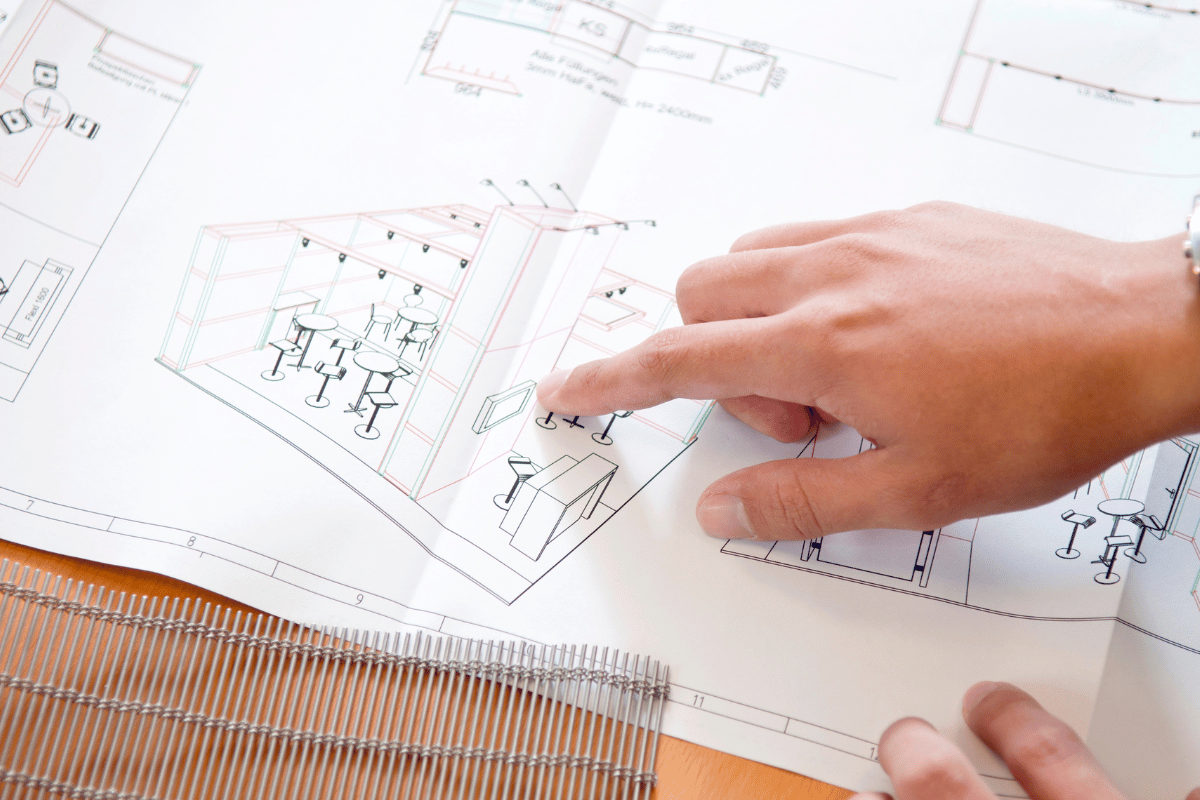
When planning a trade fair appearance, companies often receive quotes from stand builders that are hard to compare. One supplier offers “planning and construction”, the next a “complete package”, and a third charges for each service separately. What exactly is included is often only found in the small print.
At the same time, requirements are increasing. Today, exhibition stands not only need to look good but also have to adapt to different spaces and formats, be implemented quickly and look consistent across several trade fairs. If you know which services are part of professional planning, you can decide more easily what to handle yourself, what to buy in and what to look out for in a quote.
It all starts with the question of what your appearance should achieve: new contacts, a product launch, customer relationship management or brand building. This determines the target group, messages, exhibits and budget. A good briefing is the basis for making quotes comparable.
This is where you define how the stand works: stand type (row, corner, peninsula or island stand), size, zones for reception, presentation, consultation, meetings and storage, as well as visitor routes. If you plan to exhibit on different spaces or in different formats, you should already consider at this stage how the concept can be adapted.
Your corporate design is translated into a three-dimensional space: shapes, colours, materials, lighting, graphics and media. 3D visualisations show in advance how the stand will look and make internal approvals easier.
This includes construction, structural engineering, power, network, media technology, fire safety and the trade fair’s technical guidelines. Added to this are stand approvals and orders placed with the trade fair organiser, for example for electricity, water, internet or rigging points.
Stand components, graphics and furniture are manufactured or provided, transported, built up and dismantled again after the trade fair. For appearances abroad, customs and coordination with local build-up teams are added to the list. On-site support ensures that last-minute problems are solved.
After the trade fair, contacts are followed up and the appearance is evaluated: how many visitors came, which conversations took place, what worked and what didn’t? Automatic visitor measurement at the stand provides reliable figures for this, for example on visitor flows and dwell time. Many providers offer it as an additional service. This produces insights for your next appearance.
Many plans end with the dismantling. For companies that want to reuse their stand, adapt it or use it elsewhere, a separate service phase begins at this point: return transport, inspection and refurbishment of stand components, storage and adaptation to the next space or format. Ask specifically whether and how these services are included in the quote.
There is no one-size-fits-all answer. The right size depends on what is supposed to happen at the stand:
When it comes to the layout, clear zoning has proven effective: an open, highly visible entrance area, presentation areas that communicate your core message within seconds, consultation areas further inside, and back-office or storage areas out of sight. What matters is that the stand is understandable without explanation and draws visitors in intuitively.
If you exhibit at different trade fairs with different stand spaces, it is worth planning the stand concept so that it can be enlarged, reduced or reconfigured without changing your brand presence.
Not every company needs all services from a single provider. What matters is how much experience, time and management capacity your team has.
| Service area | Can be handled internally if … | Better outsourced if … |
|---|---|---|
| Goals and briefing | marketing and sales have clear trade fair goals | goals are still unclear or several departments need to be aligned |
| Space concept and design | a proven stand design is being repeated | a new concept is needed or it has to adapt to other spaces |
| Technology and approvals | the stand is simple and the trade fair is familiar | structural engineering, media technology or regulations abroad come into play |
| Production, logistics, build-up and dismantling | hardly ever: this requires a workshop, transport and installation teams | in almost all cases |
| Storage and reuse | storage space and maintenance are available in-house | stand components need to be inspected, refurbished and adapted for new uses |
| Follow-up | leads are followed up in your own CRM | a structured evaluation of the appearance is required, for example of visitor numbers, contacts and insights for the next trade fair |
Many companies work with a partner who takes care of planning, production, logistics and the evaluation of the appearance from a single source, while goals, content and lead follow-up remain with their own team. This reduces coordination effort and gives you a dedicated contact person.
For every quote, check whether these questions are answered:
The earlier you start, the more flexibility you have in terms of space, design and budget. How much lead time you need depends on the stand size, complexity and trade fair. Modular concepts and well-established processes can significantly shorten implementation time.
Planning covers concept, design, technology and organisation. Construction is the manufacturing and installation of the stand. Many providers offer both, while some only offer one part.
Registration and booking of the stand space are usually handled by the exhibitor. Orders placed with the trade fair organiser, for example for electricity or internet, can however be part of the planning service. Clarify this in the quote.
Not necessarily. If your stand concept is designed to be adaptable, further appearances often only require adjustments to the space, hall regulations and content rather than completely new planning.
Approvals, orders with the trade fair organiser, on-site support, return transport and storage are frequently missing. Ask for a written list of services.
Under the WWM umbrella, there are two ways to implement the services involved in exhibition stand planning. Which one suits you depends on how much you want to manage yourself.
Professional exhibition stand planning ranges from goals through concept, design, technology, production and logistics to follow-up, and for many companies even beyond that to the next appearance. Which services you buy in does not depend on the size of your company, but on what your appearance needs to achieve and how much your team can manage itself. If you clarify this in advance, you will receive comparable quotes and a stand that matches your goals.
Planning your next trade fair appearance? Tell us what your stand needs to achieve, and we will show you which services you really need.
 Christina Gier : Tuesday, 3. November 2020
2D vs. 3D: Which virtual trade fair stand is right for you? ✓ Learn about the pros and cons ✓ Read the blog article!

 Maxima Matara : Friday, 25. October 2024
Discover the differences between virtual reality and augmented reality and find out which technology is better suited to your exhibition stand.
 Maxima Matara : Friday, 30. October 2026
Small team, fixed budget: how mid-sized companies can recognise the right exhibition stand builder and which kind of partnership suits them.