
 Maxima Matara
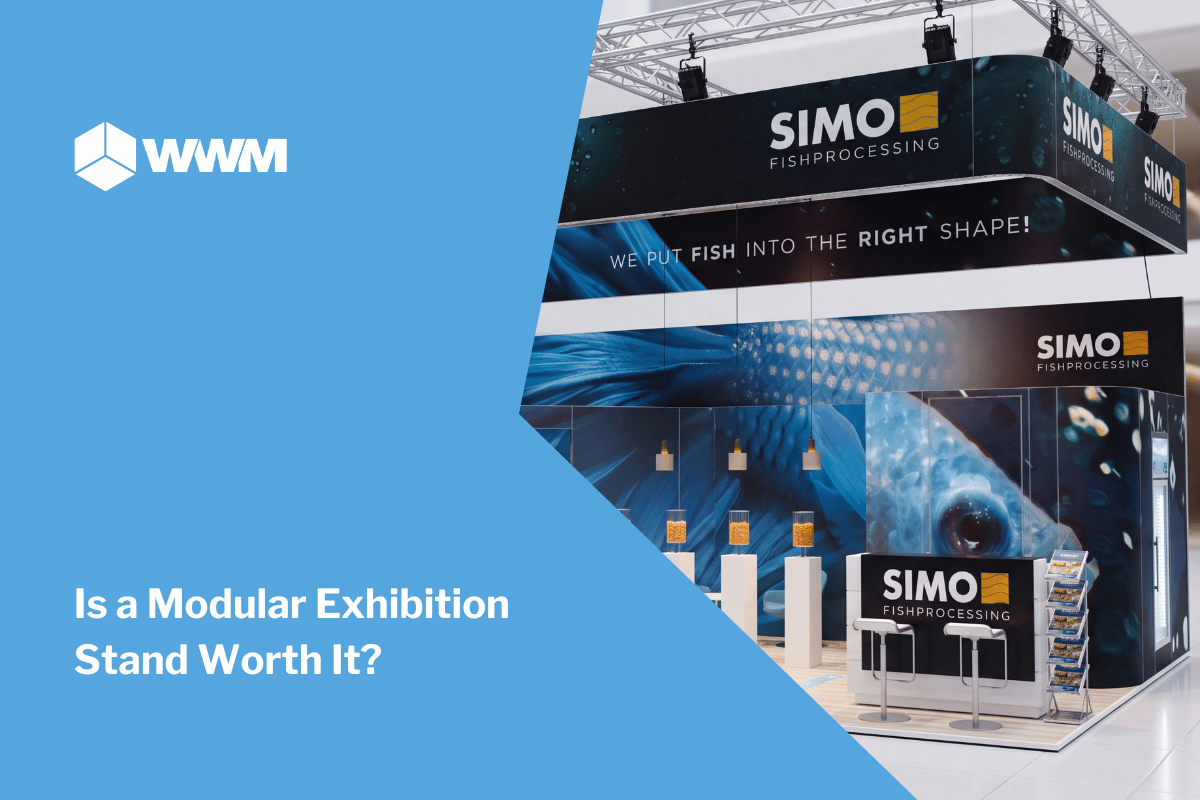
If you are planning a new trade fair appearance, you are often faced with the question: should it be a custom-built exhibition stand or a modular system?
In fact, this distinction is no longer as clear-cut as it was a few years ago. Modern modular exhibition stands offer far more design freedom than traditional system stands and are used by companies of all sizes – from a single trade fair appearance to an international trade fair programme.
The key question is therefore not: “Is a modular exhibition stand worth it?” But rather:
“Which solution best fits my requirements, goals and processes?”

What is a modular exhibition stand?
A modular exhibition stand is based on reusable system components that can be flexibly combined into different stand concepts. These include, for example, aluminium frames, graphics, lighting elements, meeting areas and digital applications.
The big advantage: existing components can be adapted, extended or reconfigured for different events. This creates solutions that can be used flexibly and planned economically.
Modular does not automatically mean standard
Many exhibitors still associate modular exhibition stands with simple system stands or fixed building-block concepts. However, this image has long since ceased to reflect reality.
The possibilities depend largely on the chosen concept and the specific requirements.
| ExpoCloud | RocketExpo | |
|---|---|---|
| Focus | Standardised, reusable components and clearly defined processes | Modular systems as the technical basis for individual brand presentations |
| Result | Particularly efficient, sustainable and internationally scalable solutions | Complemented by special components, custom-made furniture, product presentations, LED applications or architectural highlights |
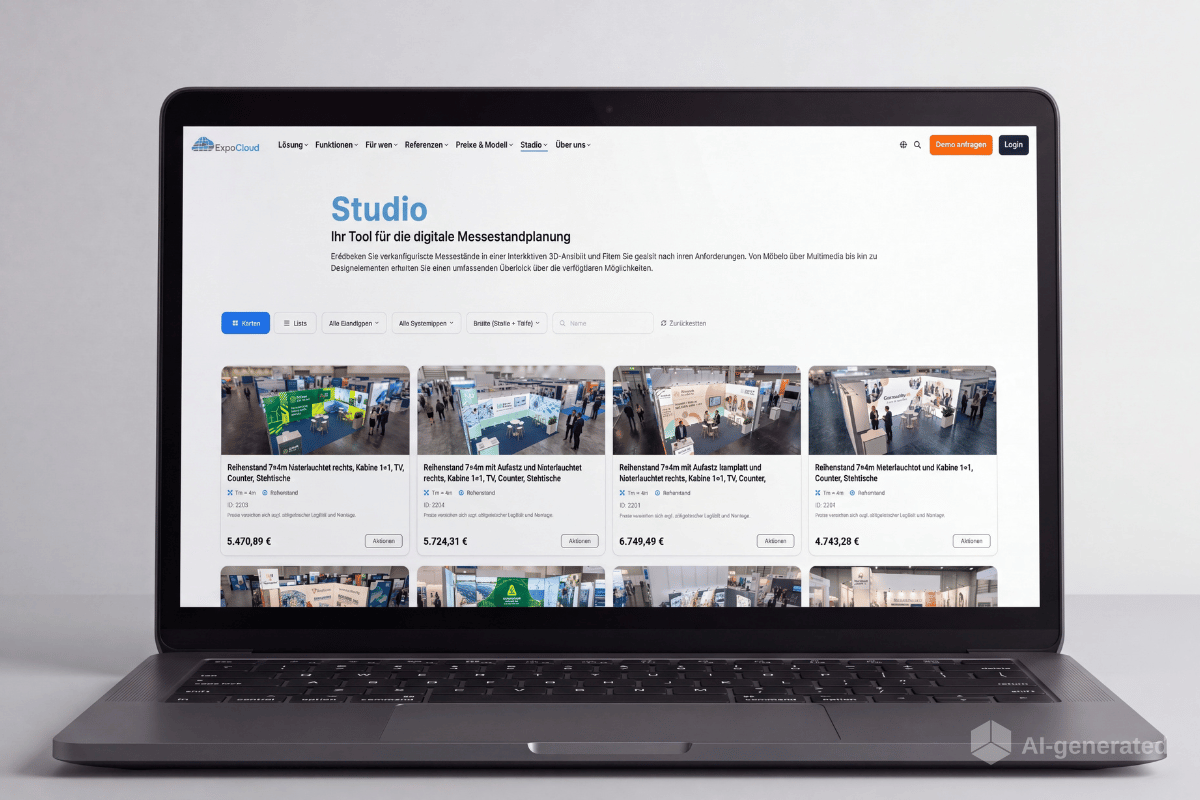
| Preview in advance | Preconfigured stands in 3D in the online tool Studio | Examples in our customer projects |
The result is exhibition stands that combine the advantages of modular systems with the design freedom of custom exhibition architecture.
Why are more and more companies choosing modular exhibition stands?
Today, the reasons go far beyond simple reuse.
More flexibility for changing requirements
Trade fairs often differ in size, target group and budget. While one event may require 80 m², 30 m² may be enough at another.
Modular systems make it possible to adapt existing components to different requirements and use them for different stand sizes.
Faster adjustments
New products, changed campaigns or an updated brand identity do not automatically have to mean a completely new exhibition stand.
Often, individual elements, graphics or modules can be replaced in a targeted way and adapted to new requirements.
Sustainability through reuse
Sustainability is becoming increasingly important for many companies.
Reusable components reduce material use, transport effort and waste. Instead of disposing of entire exhibition stands after an event, existing elements are used over many deployments.
Predictable budgets and processes
Companies with regular trade fair activities in particular benefit from standardised processes for planning, storage, logistics and build-up.
This makes it possible to plan budgets over the long term and implement international rollouts efficiently.
When is a modular exhibition stand particularly worthwhile?
Modular concepts offer advantages above all when:
- several trade fairs are planned per year
- different stand sizes are required
- trade fair concepts need to be adapted regularly
- sustainability goals are being pursued
- international events are being implemented
- budgets need to be predictable over the long term
However, this does not mean that modular exhibition stands are only economical for many events.
Companies with a single trade fair appearance also often benefit from the flexible design options, short implementation times and sustainable properties of modular systems.
Which factors influence the costs?
The costs of a modular exhibition stand depend on various factors:
| Area | Cost factors |
|---|---|
| Concept | Stand size, architecture and design, degree of customisation |
| Design | Graphics and branding, LED and media integration |
| Equipment | Floor and ceiling elements, furniture and equipment |
| Service | Logistics, installation and service |
That is why there is no universal answer to the question of what a modular exhibition stand costs.
A meaningful assessment always takes into account the planned deployments, the desired brand presence and the long-term requirements.
Buy or rent?
Both buying and renting can make sense.
| Buy | Rent | |
|---|---|---|
| Makes sense if … | components are to be used regularly over many years | maximum flexibility is required or requirements change from event to event |
Which option is more economical depends on each company’s individual circumstances. Find out more in the article Renting or Buying an Exhibition Stand?
Conclusion
Today, modular exhibition stands are much more than a low-cost alternative to traditional stand construction.
They enable flexible, sustainable and economically predictable trade fair appearances while offering a wide range of options for individual brand presentations.
Whether a modular exhibition stand is worth it therefore does not depend solely on the number of events. What matters far more is how flexible, scalable and future-proof the solution needs to be for your own requirements.
Companies that see modularity not as a limitation but as a strategic advantage benefit in the long term from efficient processes, more sustainable trade fair appearances and a high degree of adaptability to future requirements.
Request your modular exhibition stand now – free and without obligation