Skip navigation.

4 min read

The AIDA Model in Trade Show Booth Design: Guiding Visitors to Success

The AIDA Model in Trade Show Booth Design: Guiding Visitors to Success

This is a question many companies ask themselves after a trade show. Today, simply being present is no longer enough. Companies that want to succeed at trade shows must engage visitors in a targeted way, spark interest, and generate meaningful conversations and qualified leads.

This is exactly where the AIDA model comes into play. This proven concept from marketing psychology describes the individual stages potential customers go through before making a decision. In exhibition stand design, the model can be used very effectively to systematically guide visitors through a booth and gradually convert their attention into concrete actions.

At WWM GmbH & Co. KG, we regularly see how much a strategically planned exhibition stand influences trade show success. Important psychological principles can already be incorporated during the stand concept phase to optimize visitor guidance and communication.

875212201 (KI)


What Is the AIDA Model?

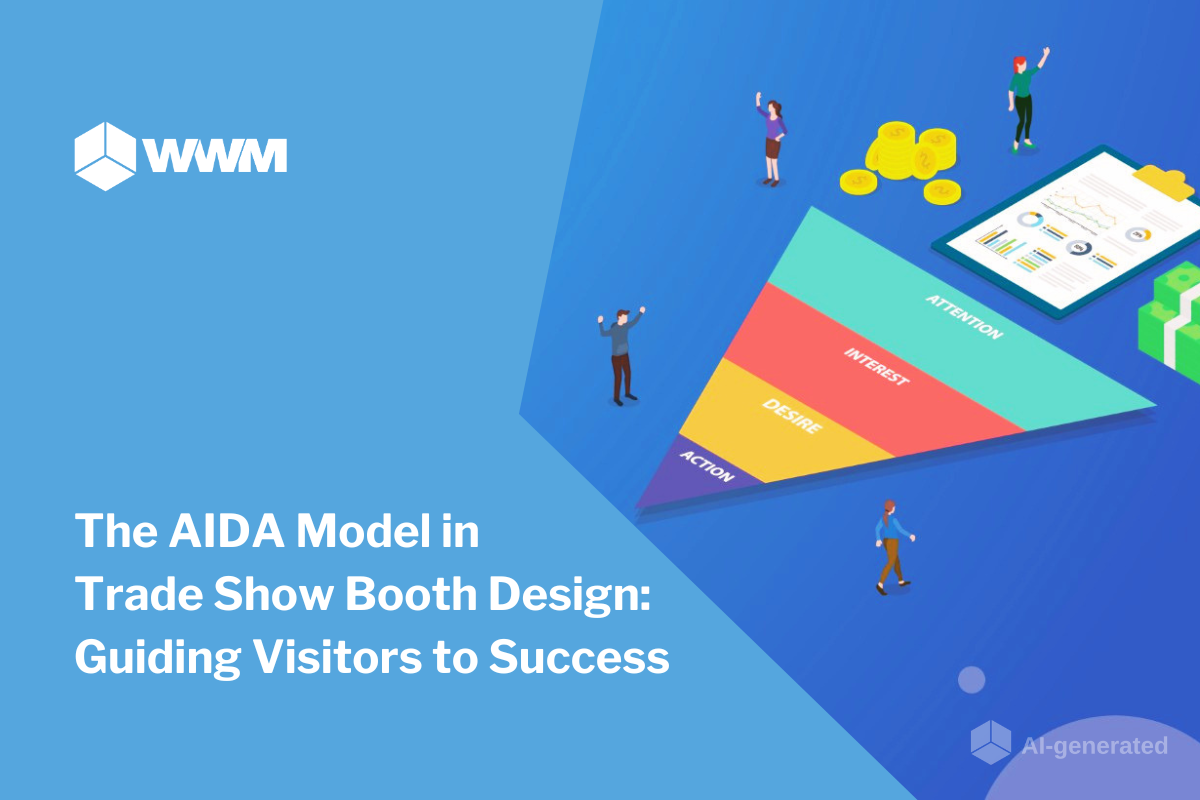
The AIDA model is one of the best-known concepts in marketing and sales. The acronym stands for four consecutive phases:

  • Attention
  • Interest
  • Desire
  • Action

The model describes the journey prospects typically take from their first contact with a company to the desired action. Originally developed for advertising, the concept can be perfectly applied to exhibition stand design.

Today, a modern exhibition stand is far more than just a presentation area. It serves simultaneously as a communication platform, an experiential space, and a sales channel. As a result, targeted visitor guidance is becoming increasingly important.

Especially at a time of rising exhibition costs and increasing demands for a strong return on investment (ROI), companies expect measurable results. The AIDA model provides a structured framework for strategically planning trade show appearances and making them more successful.


Why Is the AIDA Model Important in Exhibition Stand Design?

At trade fairs, hundreds of exhibitors often compete for the attention of the same target audience. Visitors are exposed to countless impressions, messages, and offers every day. Without a well-thought-out concept, companies risk being overlooked amid the noise of the exhibition floor.

The AIDA model helps businesses plan their trade show presence consistently from the visitor's perspective. Instead of focusing solely on presenting products or services, the entire visitor experience is designed strategically.

A practical example: Even the most innovative and technically sophisticated product may fail to attract attention if visitors cannot understand its value within a few seconds. Only when a booth captures attention, provides relevant information, and communicates emotional benefits does a visitor become willing to engage in a conversation.

At the same time, the absence of a clear strategy creates risks. Overcrowded stands, unclear messaging, or a lack of opportunities for interaction often result in lost prospects. The AIDA model provides a clear structure and helps companies achieve their marketing and sales goals more effectively.


The Four AIDA Phases at the Trade Show Booth

Attention: Capturing Attention

First impressions matter. Visitors often need only a few seconds to decide whether a booth is worth exploring.

Typical attention-grabbing elements include:

  • Eye-catching architecture
  • Strong and visible brand presence
  • Clear and easy-to-understand messaging
  • Digital displays and video content
  • Innovative lighting concepts
  • Interactive elements

From our experience as an exhibition stand builder, attention is not created by size alone. Creative design concepts with a clear message often achieve significantly better results than overloaded and cluttered booths.

Interest: Keeping Visitors Engaged

Once attention has been captured, the next step is to maintain interest.

This can be achieved through:

  • Easy-to-understand product presentations
  • Clear communication of benefits
  • Live demonstrations
  • Interactive applications
  • Knowledgeable staff representatives

Visitors want to quickly understand why an offer is relevant to them. Therefore, information should be structured clearly and presented in an accessible way.

Desire: Creating a Desire for the Solution

At this stage, the goal is to make the value of the solution tangible on both an emotional and rational level.

Successful approaches include:

  • Practical use cases
  • Reference projects
  • Product demonstrations
  • Customer testimonials
  • Storytelling

People rarely buy products alone. They buy solutions to their challenges. Therefore, the focus should always be on how the offering improves visitors' daily work or helps them achieve their business objectives.

Action: Motivating Visitors to Take Action

The fourth phase is often underestimated. Interest alone is not enough. Visitors must be encouraged to take a specific next step.

Possible actions include:

  • Scheduling appointments
  • Lead capture
  • Product demonstrations
  • Consultation meetings
  • Downloads or information materials

The easier the next step is to take, the greater the likelihood of successful follow-up and conversion.

1032167675 (KI)


Common Mistakes and Challenges

Too Much Information at Once

Many companies want to present every product and service they offer. This often leads to information overload.

Solution: Define clear core messages and prioritize content.

Lack of Visitor Guidance

Without a recognizable structure, visitors often do not know where to start or which information is most relevant.

Solution: Plan pathways, sightlines, and information points strategically.

Focusing on Products Instead of Customer Benefits

Technical details alone rarely inspire visitors. Most are primarily interested in solutions.

Solution: Place benefits and practical applications at the center of your communication.

No Clear Call to Action

Many trade show appearances end without a concrete next step.

Solution: Actively offer appointments, product demonstrations, or follow-up discussions.

Insufficient Alignment Between Marketing and Sales

Even the best-designed booth cannot reach its full potential if sales and marketing teams pursue different objectives.

Solution: Establish shared goals during the planning phase.


Our Practical Tips

1. Define a Central Message

Visitors should understand within seconds what your company offers and what value it provides.

2. Design the Booth from the Visitor's Perspective

Plan information flows, sightlines, and touchpoints along the customer journey.

3. Use Lighting Strategically

Professional lighting attracts attention and highlights key areas.

4. Create Opportunities for Interaction

Live demonstrations, touchscreens, and hands-on experiences increase visitor dwell time at the booth.

5. Focus on Emotional Experiences

People remember positive experiences more strongly than facts alone.

6. Train Your Trade Show Team

Even the best booth cannot reach its full potential if staff members do not actively engage visitors.

7. Plan Lead Capture from the Start

Digital lead collection systems and clearly defined processes simplify follow-up activities and improve sales performance.


How Do We Support You?

Successfully implementing the AIDA model begins long before the first day of the trade show. That is why we support our clients from the earliest stages of strategic planning.

Together, we develop concepts that make brand messages visible and guide visitors purposefully through the exhibition stand. We consider both creative and functional aspects throughout the process. From the initial idea and design to engineering and production, we ensure that every element works together seamlessly.

In addition, we coordinate logistics, installation, dismantling, and project support throughout the entire process. Our goal is to create exhibition stands that not only make a strong visual impression but also support our clients' marketing and sales objectives.

Thanks to our many years of experience in exhibition stand construction, we know which measures actually work at trade fairs and how marketing psychology can be effectively integrated into stand design.


Conclusion

The AIDA model in exhibition stand design clearly demonstrates that successful trade show participation involves much more than attractive design alone. Capturing attention, generating interest, creating desire, and ultimately motivating action: companies that deliberately address these four stages create significantly better conditions for qualified contacts and lasting trade show success.

The combination of strategic planning, thoughtful visitor guidance, and compelling presentation helps businesses unlock the full potential of their trade show presence. Even small adjustments to booth concepts and design can make a substantial difference.

When planning a future exhibition stand, companies should therefore view the AIDA model not merely as a marketing theory, but as a practical tool for achieving greater visibility, more meaningful conversations, and better trade show results.

Would you like to optimize your next trade show appearance and successfully integrate the AIDA model into your booth concept? The team at WWM would be delighted to support you with personalized consulting and extensive exhibition stand expertise.

Schedule an appointment today.