Intelligent software for planning trade fairs and events.
Digitalisation has firmly taken hold of our lives. Almost daily, we hear about new technologies. Many things are becoming more convenient, simpler,...
4 min read
Katharina Kurm : Updated on May 4, 2026
Why successful trade show appearances don’t fail because of design, but because of details you never see
An exhibition stand often begins with a vision: a strong design, clear brand messages, an open and inviting sense of space. All of this is important—without question. But from our day-to-day experience, we know that the success of a trade show stand is decided not on the show floor, but weeks or even months earlier, during the technical and structural planning phase.
Many problems do not arise from a lack of ideas, but from underestimated technical fundamentals. In this article, we want to offer an honest look behind the scenes: What really matters from a construction and engineering perspective in exhibition stand building? Where do typical mistakes occur? And how can they be avoided?
.jpeg?width=1920&height=1078&name=AdobeStock_525703023%20(Large).jpeg)
Whether it’s 20 or 200 square meters, a system stand or a fully custom-built solution: every exhibition stand is a temporary structure. As such, it is subject to clearly defined structural, safety-related, and regulatory requirements.
What we see time and again is this: construction planning is considered too late.
By that point, the design has already been presented, budgets have been roughly allocated—and suddenly crucial questions arise:
Where are the loads acting?
Which areas will be occupied by visitors or staff?
Which components need to be tested, certified, or approved?
How can technology, media, and lighting be integrated safely?
Our clear recommendation based on over 30 years of exhibition build experience: Structural engineering, load assumptions, and material selection must be addressed right at the very beginning, not at the end.
Only then can ideas be implemented realistically, cost‑effectively, and above all, safely.
You can find further details on planning your exhibition presence in our non‑binding whitepaper:
In exhibition construction, material choice not only determines the visual impact, but also influences fundamental factors such as:
A common mistake we see again and again in practice:
materials are selected purely from a design perspective, without considering their structural, logistical, and long-term implications.
Traditional, rigid materials such as wood or glass may appear high-quality at first glance, but they often come with significant disadvantages: high weight, limited reusability, complex installation, and—quite often—increased costs for transport, assembly, and disposal.

As an exhibition construction company with a strong focus on modular systems, we deliberately rely on materials that make structural sense, are sustainable, and can be used in a versatile way. Textile materials play a central role in this approach.
Compared to rigid materials, fabric is:
The result is exhibition stands that create an emotional impact without becoming structurally complex. Design freedom and technical safety are not opposites here, on the contrary, they reinforce each other.That is why our guiding principle is: material choice is always a strategic decision. It influences not only the visual appearance, but also the sustainability, budget, and long-term viability of your exhibition presence.
We have explored in detail how materials can be used deliberately to charge exhibition stands with emotion in a separate blog post: How the Right Materials Add Emotional Impact to Your Exhibition Stand.
One of the key questions in exhibition construction is not which system is used, but which objective is to be achieved. Is the priority maximum adaptability across different trade shows or a consistently strong brand presence with a high level of recognition over time?
This is exactly where we at WWM differentiate between flexible and custom stand solutions.
In practice, we don’t develop standard answers, but tailor‑made concepts aligned precisely with your trade show strategy, your resources, and your communication goals whether flexible, custom, or a deliberate combination of both.
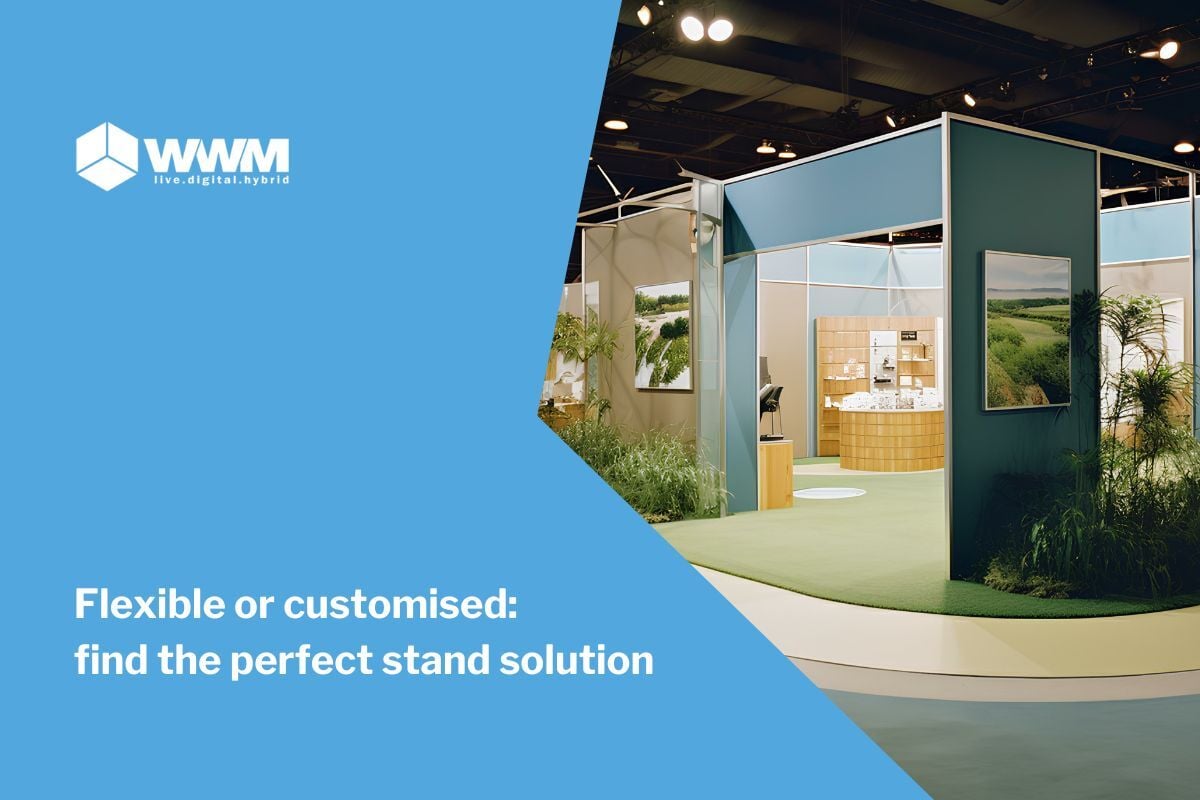
Which stand solution best suits your company is explored in detail in a separate blog article: Flexible or Custom: Finding the Perfect Stand Solution.
.jpg?width=940&height=529&name=Medien%20(32).jpg)

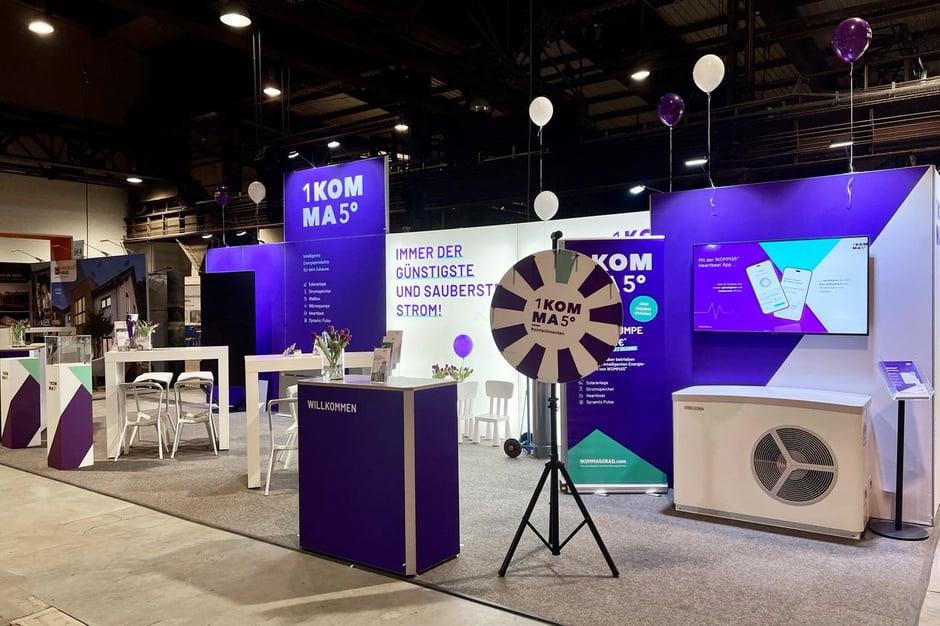
A successful trade show appearance does not depend on stand size. A project for 1KOMMA5° at the Göttingen Building Trade Fair demonstrates this very clearly. On an area of up to 40 sqm, an exhibition stand was created that deliberately captured attention through interactive displays, LED surfaces, and clear brand guidance.
The construction challenge lay less in the size of the stand and more in the sensible integration of media technology, lighting, and modular frame systems—stable, safe, and flexible at the same time. The result was a compact stand that actively attracted visitors and invited them to linger.
This project clearly shows:
well-engineered construction and thoughtfully integrated technology enable powerful trade show experiences—even on small footprints.
You can read how the exhibition stand for 1KOMMA5° was implemented in detail in our Case Study.
A successful exhibition stand is not created by spectacular visualizations alone. It is the result of sound planning, honest consultation, and solid construction experience.
At WWM, we see ourselves not just as implementers, but as sparring partners. We ask the questions that need to be asked, even when they are uncomfortable. Because in the end, only one thing matters: your presence has to work. Technically, economically, and emotionally.
Let’s talk about your next project
Whether it’s an initial idea or an advanced plan: if you’re looking for an exhibition partner who thinks constructively, identifies risks early, and develops solutions, we’re happy to support you.
Get in touch with us.
We share our expertise to ensure your exhibition presence stands on a solid foundation from the very beginning.
Digitalisation has firmly taken hold of our lives. Almost daily, we hear about new technologies. Many things are becoming more convenient, simpler,...
A successful trade fair presentation starts with the right strategy. One of the key questions is how your exhibition stand should be designed: ...
Sponsorship, Disclosure Obligations, and Ethics Trade fairs are a central component of many companies’ marketing and sales strategies. They are where...